Gardening Made Simple.
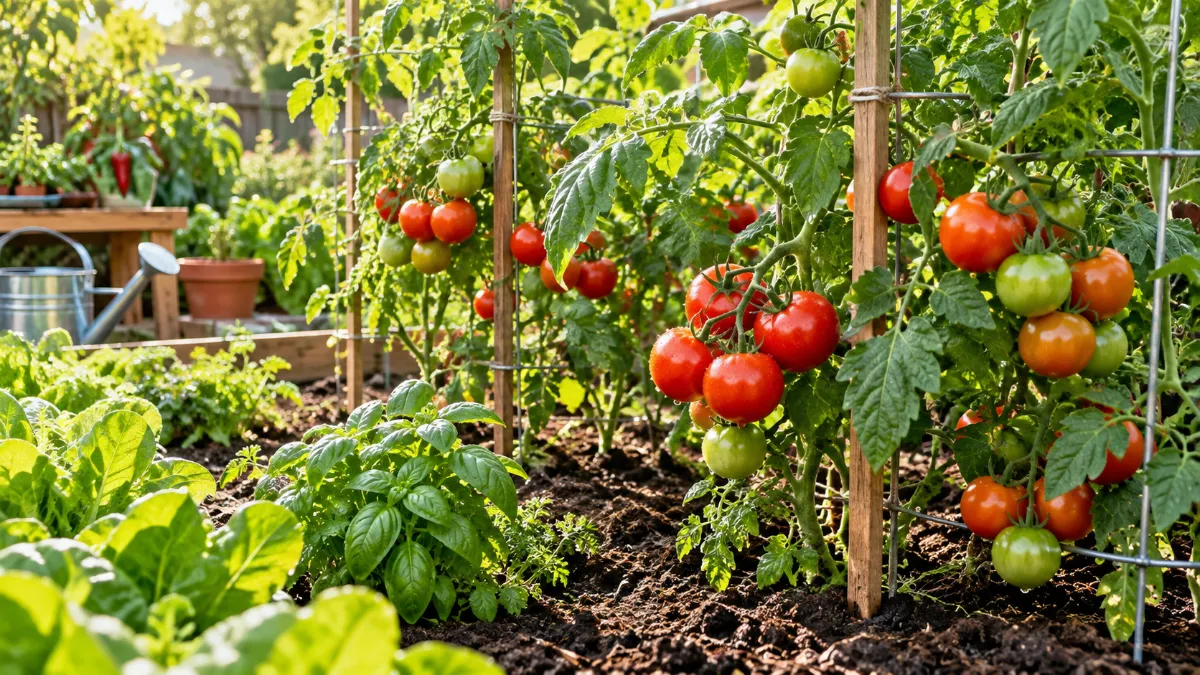
How to Grow Tomatoes at Home becomes much easier when your plants receive six to eight hours of direct sun, rich well-draining soil and steady moisture. For a busy gardener with limited time, the simplest approach is to buy healthy seedlings, plant them after frost risk has passed, support them early and check them once a week.
Tomatoes are technically fruits, although most home gardeners grow them like vegetables. They are productive, versatile and suitable for beds, patios and large containers. With the right timing and a few consistent habits, beginners can harvest fresh tomatoes without building a complicated garden system.
To grow tomatoes at home successfully, begin by matching the plant to your space, growing season and available time. A sunny garden bed offers more root space, while a 5- to 15-gallon container works well for patios, balconies and small yards.
Tomatoes perform best in rich, well-draining soil. Therefore, mix organic compost into the planting area before transplanting. A soil pH between 6.0 and 6.8 supports healthy nutrient availability, although drainage and sunlight usually create the biggest visible difference for beginners.
Container tomatoes dry out faster than plants in the ground. Therefore, a large container is not just a convenience. Instead, it reduces sudden moisture swings, which can stress the plant and make daily care more demanding.
Read More: How to Grow Tomatoes at Home
For most first-time gardeners, seedlings are the faster and simpler choice. A healthy transplant has already passed through the earliest growth stage, so you can focus on planting, watering, feeding and support instead of setting up indoor lights and seed-starting supplies.
Seedlings also reduce the time required before outdoor planting. However, garden centers often carry only a small selection of tomato varieties. By contrast, farmers markets and small local farms may offer more heirloom options.
| Starting method | Best for | Advantages | Limitations |
|---|---|---|---|
| Seedlings | Beginners, small gardens and busy growers | Less equipment, less indoor care and quicker outdoor progress | Fewer varieties and a higher cost per plant |
| Seeds | Specific varieties, large gardens and self-sufficient growers | More choice, lower cost per plant and useful seed-starting practice | Needs time, supplies, indoor space and careful seedling care |
Starting from seed makes sense when you want unusual varieties, a large number of plants or a future garden grown mostly from seed. It can also suit gardeners interested in sustainability, self-sufficiency or learning the full growing process.
For a first season, starting with a few seedlings is usually the practical decision. As a result, the saved time can be used to learn plant spacing, watering and vine training. That foundation often matters more than the starting method.
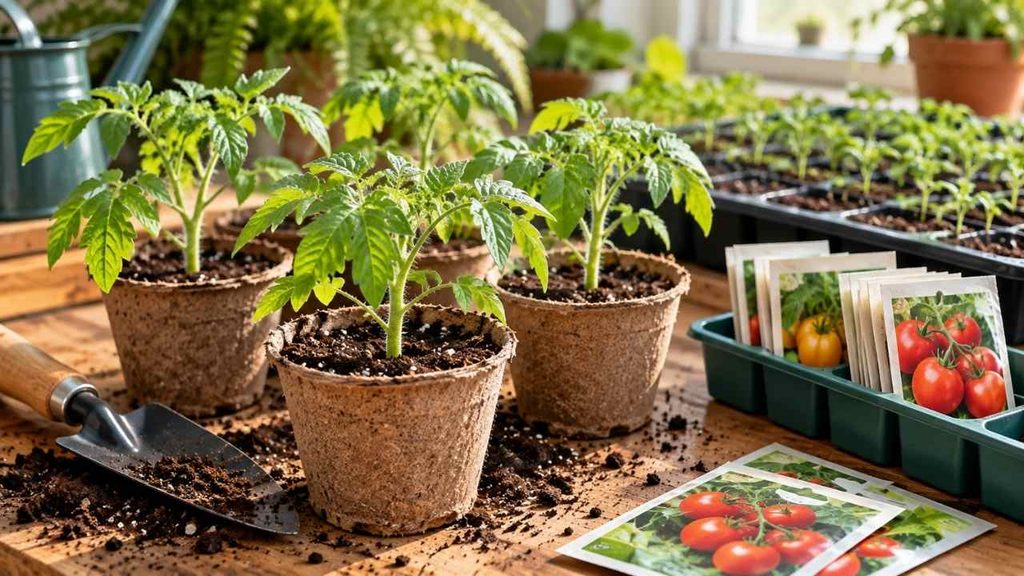
Select short, sturdy plants with dark green leaves and a compact shape. In contrast, avoid wilted or leggy seedlings, yellow or black leaf spots and roots that have begun circling tightly inside the pot.
Do not assume that every store-bought transplant has been hardened off properly. If the plant has lived indoors, gradually expose it to outdoor conditions before planting. Otherwise, sudden wind, bright sun and cool nights can cause transplant stress.
Plant tomato transplants only after frost risk has passed and nighttime air temperatures remain above 10°C. Around 15°C is more comfortable for steady growth. However, cold soil can leave young plants stalled, even when the calendar suggests planting time.
Timing also depends on the length of your growing season. First, check the variety’s days to maturity, which commonly refers to the period from transplanting to harvest. Then count forward from the planting date and compare that period with the expected first frost in autumn.
Short-season gardeners may benefit from varieties that mature in about 55 to 60 days. For example, in a cool zone 5b garden, planting may be delayed until mid-June. That delay can feel late, but tomatoes planted under favorable conditions often catch up with plants exposed to cold soil.
In warmer regions, especially zones 7 and above, extreme afternoon heat creates a different problem. Consequently, tomato blossoms may drop and fruit set may fail when temperatures rise above 30°C. Partial afternoon shade can help protect plants during the hottest period.
Harden seedlings gradually before transplanting. Over several days, increase their outdoor exposure while protecting them from harsh wind and intense afternoon sun. Plant when the nighttime soil temperature is at least 10°C and no frost is forecast.
Cloudy weather or early evening is ideal for transplanting. In this way, the plant has time to adjust before facing strong afternoon sunlight. This small timing choice can reduce wilting during the first day.
Tomatoes can grow roots along buried stems, so deep planting helps create a stronger root system. First, remove the lower leaves. Next, bury the stem up to just beneath the lowest remaining leaves and water the root area thoroughly.
Spacing normally ranges from 18 to 36 inches between plants. The correct distance depends on the tomato type, support system and pruning plan. However, crowded plants dry slowly after rain, which reduces airflow and increases disease risk.
A handful of worm castings or compost can be added to the hole. Some gardeners also use a small amount of bone meal or balanced slow-release fertilizer. However, always mix amendments into the soil so the roots do not rest directly against concentrated fertilizer.
Very tall, weak seedlings can be planted horizontally in a shallow trench. Leave the upper section above the soil and bury part of the stem. As a result, new roots can form along the buried portion.
Install cages, stakes or vertical strings at planting time. Otherwise, waiting until the vine becomes large can disturb roots or make it difficult to attach heavy stems without breaking them.
Determinate tomatoes are usually shorter and more compact. Meanwhile, indeterminate varieties continue growing and often need stronger, taller support. Therefore, the support method should match the variety rather than the size of the transplant on planting day.
Tomato care depends on consistency more than complicated technique. Throughout the growing season, monitor water, nutrition, airflow and plant health. A brief weekly inspection can reveal pests, damaged leaves or loose stems before a small issue becomes difficult to manage.
Tomatoes generally need about 1 inch of water per week. During very hot weeks, they may need close to 2 inches. Instead of applying a small amount every day, water deeply once or twice a week and do not allow the soil to dry out completely.
Early morning is the best watering time. Direct water to the soil around the stem and keep the leaves as dry as possible. In particular, wet foliage overnight can create conditions that favor disease.
Container plants need more frequent attention. Many require water once a day during the growing season and twice a day during the hottest summer weather. Even so, check the soil rather than following a rigid schedule.
Tomatoes are heavy feeders, but more fertilizer is not always better. Pale yellow-green foliage and slowed growth can indicate that a plant needs feeding. On the other hand, excessive nitrogen may produce lush leaves with fewer flowers and fruits.
Container soil contains less nutrient reserve than garden soil. Consequently, container plants often need more regular feeding. Apply fertilizer according to the product label, especially when using concentrated organic liquids.
Pruning is mainly useful for indeterminate tomatoes. By comparison, determinate or bush varieties generally should not be heavily pruned because their compact growth and fruit production are more limited by nature.
Check indeterminate plants about once a week. During that check, remove lower leaves that touch the ground, tie stems to their supports and prune excess suckers when necessary. Aim for one to three main stems if the plant is being grown vertically.
Good airflow is the main reason for pruning. In addition, fruit that hangs near the ground may suffer more insect damage and rarely ripens cleanly. Remove diseased leaves and clean pruners between plants.
Indeterminate plants can be topped about four to six weeks before the expected final frost. This redirects energy toward existing fruit that has time to ripen.
The most reliable protection is regular observation, clean gardening and good airflow. Inspect leaves at least weekly, including their undersides. When you find visible insects, remove them by hand, crush pest eggs and discard diseased foliage away from the growing area.
Mulch creates a useful barrier between soil microbes and tomato foliage. Straw, shredded leaves, untreated wood chips, grass clippings and compost can all work. In humid gardens, compost mulch may be preferable to straw because it is less likely to shelter slugs and snails.
Companion plants may also help. For example, basil, marigolds, mint and nasturtiums can attract beneficial insects or discourage some pests. However, they are supportive additions rather than a replacement for inspection and garden hygiene.
For broader plant-health practices, the University of Minnesota Extension guide to plant disease management explains prevention principles that apply across many home gardens.
Many tomato failures begin with timing or moisture rather than a lack of gardening skill. For a busy gardener, most problems can be avoided by keeping the routine simple and checking the plants before work or early in the morning.
The practical lesson is clear: choose the right variety for your season, then make watering and support predictable. In many gardens, those two habits save more time than complicated treatments.
Most ripe tomatoes gently give when pressed and show the color described on the seed packet. Ripeness is less obvious in dark purple, blue or black varieties. Therefore, consider firmness, color development and the variety’s normal appearance together.
Weather, variety and personal taste all affect the preferred harvest stage. For example, a tomato picked slightly before full ripeness can finish ripening on a kitchen counter if it has already begun to develop color.
Fully green tomatoes that are not intended for green-fruit recipes usually will not ripen well after picking. During late summer, plan how you will use the crop. Fresh eating, sauces, preserving and other recipes require different harvest quantities and preparation supplies.
A low-maintenance tomato routine begins with decisions made before planting. Choose a variety suited to the available season, use a large container or spacious bed and install support before the plant becomes difficult to handle.
That last approach is useful for gardeners with limited time. An early variety may provide fruit sooner, while a longer-season plant can extend the harvest. As a result, the comparison also teaches which types perform best in your local conditions without requiring a large garden.
Tomatoes need at least 6 hours of direct sunlight daily. Eight hours usually supports stronger growth and better production, especially in cooler climates with shorter growing seasons.
Yes. Use a pot or fabric grow bag holding at least 5 gallons. A 10- to 15-gallon container offers more root space and usually needs less frequent watering.
A soil pH between 6.0 and 6.8 is suitable. In addition, rich, well-draining soil mixed with organic compost is essential for healthy roots and steady growth.
Deep planting is beneficial because tomatoes can form roots along buried stems. Remove lower leaves and bury the stem just below the lowest remaining leaves.
Many container tomatoes need water once daily during the growing season. On very hot days, they may need watering twice, but always check the soil first.
No. Pruning is mainly useful for indeterminate varieties. Determinate or bush tomatoes usually should not be heavily pruned because they have a naturally compact growth habit.
Extreme heat can cause blossom drop and poor fruit set. In warmer regions, afternoon shade may help when temperatures rise above 30°C.
Tomatoes that have started to show color can continue ripening indoors. Fully green tomatoes generally will not ripen well unless the variety is meant to be eaten green.
Growing a reliable tomato crop in 2026 starts with three decisions: choose the right planting time, provide enough root space and maintain steady moisture. Seedlings make the first season easier, while seeds offer more variety and lower cost for larger gardens.
Before planting, confirm local frost conditions, check the variety’s days to maturity and prepare the support system. Then keep the routine simple: inspect weekly, water deeply, feed thoughtfully and harvest at the stage you enjoy most.