
Gardening Made Simple.
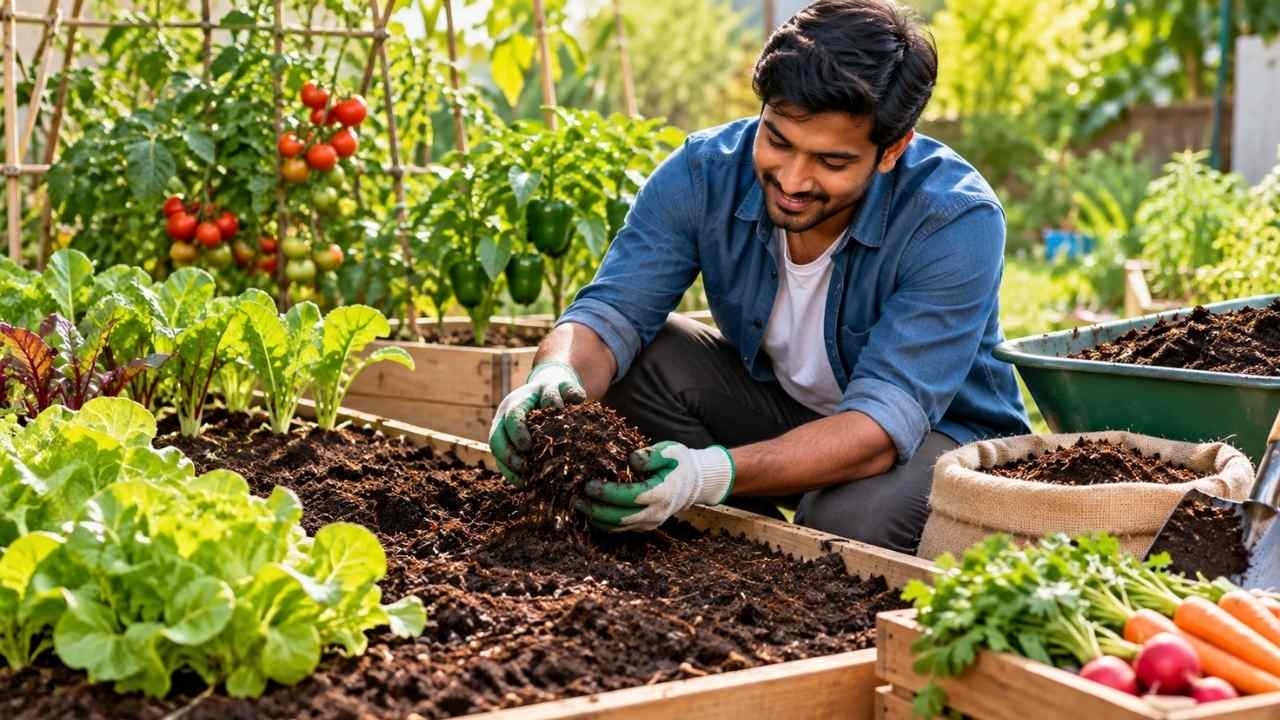
Best Vegetable Garden Soil gives vegetables the balanced foundation they need for strong roots, steady moisture, available nutrients, and active microbial life. In 2026, gardeners in Bangladesh can improve difficult native ground by combining organic matter with suitable texture and checking soil pH before planting. However, the right method depends on whether you grow in open ground, raised beds, or containers.
The best vegetable garden soil supports more than plant growth. It gives roots physical space, oxygen, moisture, and accessible nutrients during a short growing season. As a result, tomatoes, leafy greens, gourds, beans, and root vegetables all depend on this underground environment before they show visible growth above the surface.
Vegetables are heavy feeders. Annual crops must grow quickly, flower, and produce harvestable food within a limited period. Therefore, poor soil can create problems early, even when the plants receive regular watering or fertilizer.
Sticky clay can hold too much water and restrict oxygen around the roots. On the other hand, loose sandy soil may drain so quickly that plants lose moisture before they can use it. Consequently, both conditions can cause weak growth, small harvests, and frequent watering problems.
For example, a tomato plant growing in compacted clay may remain green but develop slowly because its roots cannot expand freely. Similarly, a leafy vegetable in very sandy soil may wilt soon after irrigation. Improving texture with organic matter therefore creates a more welcoming root zone.
The ideal vegetable-growing medium is generally loam, a balanced mixture of approximately 40 percent sand, 40 percent silt, and 20 percent clay with abundant organic matter. This combination drains excess water while retaining enough moisture and minerals for vegetable roots.
Loam is not a single commercial product. Instead, it describes the physical balance of soil particles. Compost, aged organic matter, and suitable amendments can help move difficult ground closer to that balance, although the exact improvement depends on the starting soil.
| Soil component | Main role | Common concern when excessive |
|---|---|---|
| Sand | Improves drainage and air movement | May lose water and nutrients too quickly |
| Silt | Holds moisture and supports productive texture | Can compact or form a surface crust |
| Clay | Stores minerals and moisture | May become dense and poorly aerated |
| Organic matter | Supports structure, moisture retention, and soil life | Fresh material may disturb plant growth |
A practical test is to squeeze slightly moist soil in your hand. If it forms a firm lump that stays dense, clay may be dominant. Conversely, if it falls apart immediately and feels gritty, sand may be more prominent. This simple observation is useful, but it does not replace a proper soil test.
Most food crops perform best in slightly acidic to neutral soil, usually within a pH range of 6.0 to 6.8. This range helps many essential nutrients remain available to roots. However, individual crops can vary, so a soil test is more reliable than guessing from plant symptoms.
Soil pH affects nutrient availability. For instance, a bed may contain nutrients yet still show poor growth if the chemistry prevents roots from accessing them efficiently. Lime can raise soil pH while sulfur can lower it, but neither amendment should be added without a test-based reason.
Gardeners can review a regional testing option through the UNH Extension Soil Testing program. Meanwhile, Bangladesh gardeners may also consult a local agricultural extension office, horticulture department, or reputable soil laboratory for regionally suitable testing.
Collect small samples from several points in the same bed, mix them cleanly, and follow the laboratory’s instructions. Also, avoid taking a sample from a compost pile or from one unusually wet corner. A mixed sample gives a more useful picture of the growing area.
Testing becomes especially valuable before adding lime, sulfur, or large quantities of fertilizer. A common mistake is treating every weak plant as a nutrient-deficiency problem when poor drainage, compaction, or unsuitable pH may be the real cause.
The best vegetable garden soil depends on the growing setup. Open ground has a native soil base, raised beds need a carefully balanced fill, and containers require a lightweight medium. Therefore, using the same mixture everywhere can create avoidable drainage and root-health problems.
Work finished organic compost into the top 6 to 8 inches of native soil. This depth improves the main root zone, loosens compaction, and encourages beneficial earthworms. However, mix gently rather than repeatedly turning the soil, especially when it is very wet.
For a new plot, remove large stones and persistent debris before incorporating compost. In addition, do not use fresh manure directly around growing vegetables because it may be too strong and may create food-safety concerns. Finished compost should have a dark, crumbly texture and an earthy smell.
A practical raised-bed blend contains one-third compost, one-third peat moss or coco coir, and one-third coarse vermiculite or perlite. This structure aims to balance moisture retention with aeration in a space that has no natural subsoil beneath the root zone.
| Raised-bed ingredient | Purpose | Bangladesh-friendly consideration |
|---|---|---|
| Finished compost | Adds organic matter and supports soil life | Use mature, clean compost from a trusted source |
| Coco coir or peat moss | Helps retain moisture | Coco coir can be a practical local alternative when properly prepared |
| Coarse vermiculite or perlite | Improves air space and drainage | Choose a horticultural grade suitable for planting |
Raised beds can dry faster than ground-level plots during hot weather. Therefore, check moisture below the surface with a finger before watering. The top may look dry while the lower layer remains moist, particularly after heavy rain.
Containers need a lightweight potting mix, not heavy native topsoil. Dense soil in a restricted pot can become waterlogged and leave too little air around the roots. This problem becomes more serious when drainage holes are small or blocked.
Choose containers with open drainage holes and avoid placing them directly on surfaces that seal the openings. For instance, a balcony vegetable garden in Dhaka may need closer moisture checks because heat can dry the upper layer quickly while compacted soil remains wet below.
Organic matter is usually the most useful starting point for improving garden soil. Finished compost can support structure, moisture retention, and biological activity at the same time. Yet compost cannot correct every issue, so texture and pH should still guide the next amendment.
The timing also matters. For example, mixing compost into dry, workable soil is easier than working a saturated bed. In humid or rainy conditions, avoid turning soil when it sticks heavily to tools because this can create dense clods that are difficult to break later.
| Approach | Advantages | Limitations |
|---|---|---|
| Finished compost | Improves structure and adds organic matter | Does not replace a soil test or fix every pH issue |
| Raised-bed blend | Offers control over texture and drainage | Requires more materials and can dry faster |
| Commercial fertilizer | Can supply selected nutrients quickly | Does not create good structure or microbial life by itself |
| Native topsoil in containers | Easy to obtain in some locations | May become heavy, compacted, and waterlogged |
The key judgment is simple: fertilizer feeds plants, while healthy soil supports the entire root environment. Therefore, a temporary green-up does not prove that the growing medium is well balanced.
Soil is a living ecosystem, not an empty planting material. Crops remove nutrients as they grow and are harvested, while rainfall and irrigation can move soluble nutrients through the soil. For that reason, regular maintenance keeps the bed productive instead of forcing each season to begin from zero.
Apply about 1 to 2 inches of finished organic compost to the surface every spring or autumn. Spread it evenly around established plants without burying stems. Over time, surface application supports soil life and reduces the need for aggressive digging.
Natural mulch protects the surface from intense sunlight, limits weed pressure, and reduces the formation of a hard crust. As it breaks down, mulch also contributes organic material to the soil food web. However, keep a small gap around plant stems to reduce excess moisture against the base.
Dry leaves, clean straw, and other suitable plant-based materials can serve as mulch when they are free from chemical contamination and mature enough for garden use. A thick, wet layer pressed directly against leafy greens may encourage problems, so apply it loosely and monitor the bed after rain.
Many vegetable garden failures begin with an incorrect assumption about the soil. Adding more fertilizer is not always the solution. Often, roots need better air space, steadier moisture, or a more suitable pH before extra nutrients can help.
One realistic example is a raised bed that receives daily watering during a hot week. If the lower mix already holds moisture, extra irrigation can reduce oxygen around roots. Thus, checking below the surface first is more useful than following a fixed watering schedule.
Start with structure before chasing rapid plant growth. A loose root zone with steady moisture gives vegetables a better chance to use available nutrients. In practice, the best vegetable garden soil is usually the result of testing, measured amendment, and seasonal care rather than one expensive product.
For Bangladesh gardeners, the best results often come from matching the soil plan to the site. Heavy rain, hot balconies, compacted yards, and limited container space each create different priorities. Therefore, the same compost cannot solve every physical problem.
Loamy soil with balanced sand, silt, clay, and organic matter is generally best. It should drain excess water, retain moisture, provide air space, and support a pH near 6.0 to 6.8.
Heavy garden soil is usually unsuitable for containers because it can compact and hold too much water. Instead, use a lightweight potting mix with reliable drainage.
For in-ground plots, incorporate compost into the top 6 to 8 inches. For seasonal maintenance, apply roughly 1 to 2 inches of finished compost across the surface.
Both can help retain moisture in raised-bed mixes. Coco coir may be a practical choice in Bangladesh, but it should be properly prepared and combined with compost and an aeration material.
Most vegetables prefer slightly acidic to neutral soil, commonly between pH 6.0 and 6.8. Therefore, test before adding lime or sulfur because the correct amendment depends on the starting pH.
Poor drainage, compacted soil, unsuitable pH, or weak root aeration may be limiting growth. Fertilizer cannot correct every structural problem, so inspect the root zone first.
Prepare beds before planting and refresh the surface with finished compost in spring or autumn. Also, avoid digging saturated soil, particularly when clay is dominant.
The best vegetable garden soil combines suitable texture, stable moisture, available nutrients, and active biological life. Loam offers a useful target, while compost and careful amendments help adapt native ground, raised beds, and containers to vegetable production.
Before planting, test the soil where possible, improve the root zone gradually, and choose materials that match the growing setup. For a productive 2026 garden in Bangladesh, consistent soil care will usually matter more than a single heavy application of fertilizer.
Subscribe to the blog and newsletter to get new updates in simple, clear words straight to your inbox.
Recent Articles
Related Articles
Keengarden is your simple, friendly guide to growing healthy plants, fixing garden problems, and choosing the right tools.
© 2025 keengarden. All rights reserved. Designed by Affpilot