
Gardening Made Simple.
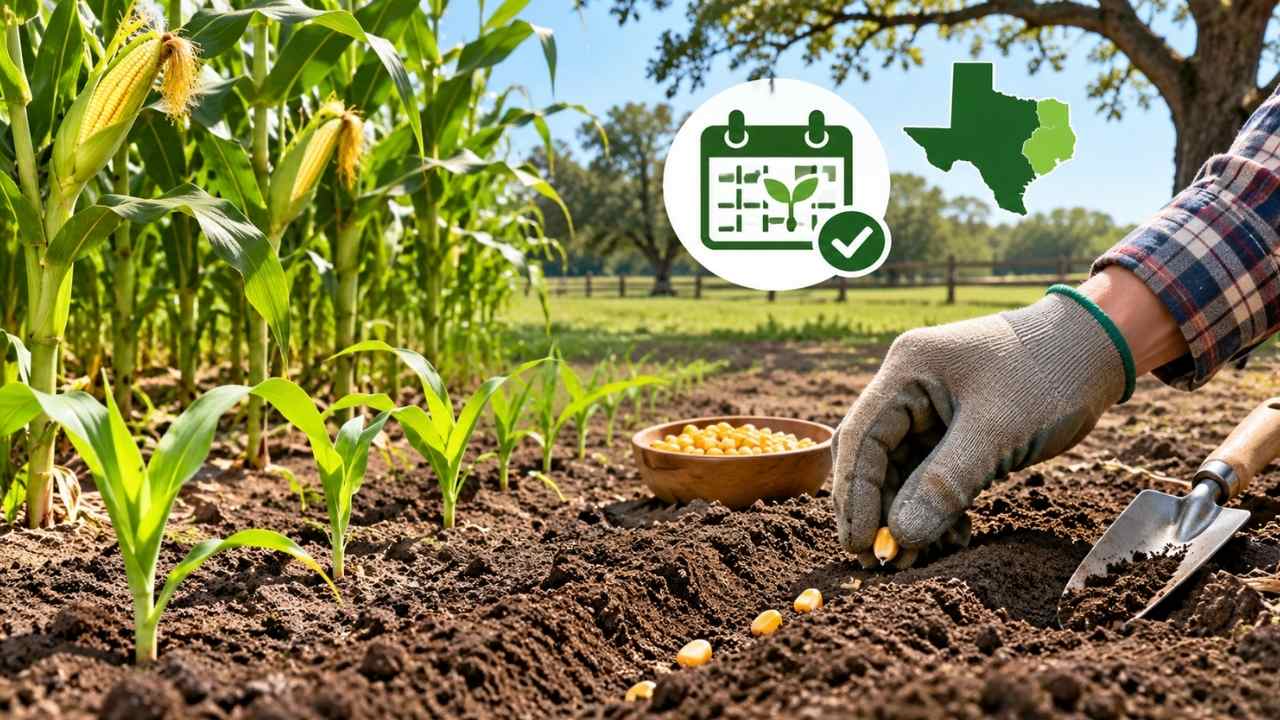
When to plant corn in East Texas is mainly a spring decision. For sweet corn, the most reliable planting window is March 1 through April 12, after the danger of the last frost has passed. Around Tyler, many gardeners may sow between March 29 and April 12, but soil temperature matters more than a calendar date alone.
Corn grows best when the soil reaches at least 60°F to 65°F. Although seeds may germinate at about 50°F, cold and wet ground can slow emergence or cause seed rot. Therefore, a simple soil-temperature check can prevent a disappointing start.
In East Texas, plant sweet corn outdoors from March 1 through April 12 when the last-frost risk has passed and the soil has warmed to at least 60°F. In practice, a planting date near the end of March or the first half of April often gives beginners a practical balance between warm soil and enough growing time.
However, local conditions can vary across East Texas. For example, a sunny garden with well-drained soil may warm earlier than a low area that stays damp. Around Tyler, the March 29 to April 12 period is a useful example of how the general spring window can shift within the region.
For the most accurate decision, check both conditions below:
Sweet corn needs a soil temperature of at least 50°F for basic germination, but 60°F to 65°F is a better target for reliable emergence and early growth. As a result, warmer soil helps seedlings establish more evenly while reducing the risk that seeds will remain inactive in cold ground.
Use a clean soil thermometer in the morning when the ground is usually coolest. Also, take readings from the planting depth rather than the surface because the top layer can warm quickly during a sunny afternoon.
| Soil condition | What it means | Practical choice |
|---|---|---|
| Below 50°F | Germination may be slow or uneven. | Wait for warmer conditions. |
| 50°F to 59°F | Seeds may germinate but growth can be weak. | Plant only if conditions are drying and warming. |
| 60°F to 65°F | A stronger range for emergence and early development. | Good time to sow sweet corn. |
| Above 65°F | Warm enough for quick establishment if moisture is adequate. | Plant promptly and maintain even moisture. |
Cold wet soil is a common reason for missing rows. If a seed sits in saturated ground for several days, it may rot before a shoot appears. Therefore, good drainage matters just as much as the thermometer reading.
Succession planting means sowing separate batches of corn at intervals instead of planting the entire crop on one date. In East Texas, a second batch can usually be planted 2 to 3 weeks after the first, creating a longer harvest period instead of one large harvest at once.
For example, a gardener who plants the first row on April 1 might sow another row around April 15 to April 22. Still, the exact date should follow soil temperature and moisture conditions. In addition, staggered plantings reduce the risk of losing the entire crop to one period of poor weather.
Continue succession planting through June 1 when the selected variety has enough time to mature before difficult summer conditions. Faster-maturing varieties that need 60 to 90 days may sometimes be planted through mid-June. However, read the seed packet carefully because maturity estimates differ by variety and growing conditions.
The main advantage is steady harvest timing. On the other hand, the trade-off is that later plantings face hotter weather and may require more careful watering.
New gardeners do not need a complex schedule. Instead, choose one spring planting date between March 1 and April 12, test the soil temperature and sow when the ground is warm and workable. A single well-timed planting is usually more reliable than several early plantings made in cold soil.
Suppose the calendar shows March 10 but the soil is still below 50°F after several cool, wet days. In that situation, waiting may produce better results than planting immediately. By contrast, a warm garden near Tyler may be ready closer to late March or early April.
More experienced gardeners can divide the crop into several blocks. First, plant the first block when soil reaches 60°F to 65°F. Then repeat every 2 to 3 weeks while the season remains suitable. Select early varieties for later sowings because a shorter maturity period gives the crop more room before summer stress.
Keep a simple record of sowing dates, soil readings and emergence dates. After two or three seasons, those notes can reveal whether a particular garden warms early or stays wet longer than nearby locations.
For broader Texas garden timing, compare the corn schedule with guidance for When to Plant Okra in Texas. The crops have different temperature preferences, so one planting calendar should not be applied to every vegetable.
A smaller fall crop can sometimes be planted in East Texas, but spring remains the primary and most dependable season for sweet corn. Even so, fall planting has a narrower margin for error because seedlings must establish before changing weather reduces growth.
Choose a fast-maturing variety for a fall attempt and plant only when the soil still has enough warmth for quick emergence. In addition, the garden should drain freely after rain. A fall crop planted into cool or waterlogged ground may struggle even when the initial calendar date appears reasonable.
Fall corn is best treated as an extra opportunity rather than the main harvest plan. Therefore, gardeners who want dependable results should prioritize the spring window before experimenting with a later crop.
Most corn timing problems come from planting by date alone. Because East Texas weather can change quickly, the calendar should be used with soil temperature and moisture observations rather than as the only planting signal.
One practical improvement is to check the soil in two places. For instance, a raised, sunny bed may be ready while a shaded low section remains too wet. Consequently, plant according to the actual bed rather than assuming the entire garden has the same temperature.
Strong emergence begins with a suitable planting bed. First, break up compacted soil, remove standing water and avoid working the ground when it is sticky. Seeds need moisture, but they also need air around them so the embryo can develop.
Plant in a block rather than one long isolated row when space allows. Since corn is wind-pollinated, a compact block generally supports more effective pollination than a single narrow row. However, the final spacing should follow the seed packet because variety size and planting method differ.
Keep moisture steady after sowing. If the soil dries sharply and then floods, emergence can become uneven. Once seedlings appear, monitor the bed regularly instead of waiting for visible stress.
Extension resources can help gardeners adapt general timing to local conditions. For example, the Texas A&M AgriLife Extension service provides regionally relevant information that can complement soil-temperature observations and seed-packet instructions.
Generally, March and early April are the best periods. Plant between March 1 and April 12 after frost danger has passed and soil temperature reaches at least 60°F.
It can germinate at about 50°F, but emergence may be slow and uneven. Instead, waiting for 60°F to 65°F usually provides a better start.
Late April can still work in suitable conditions, especially with a fast-maturing variety. Before planting, check soil moisture and allow enough time for the crop to mature.
Sow another batch about 2 to 3 weeks after the first planting. You can continue through June 1 or toward mid-June for suitable 60- to 90-day varieties.
Most likely, cold wet soil caused the problem. Corn seeds can decay when they remain in saturated ground, particularly when soil temperature stays below the preferred range.
A small fall crop is sometimes possible, but spring is more dependable. For a fall attempt, use a fast-maturing variety and plant while the soil remains warm and well drained.
The most dependable answer to when to plant corn in East Texas is to combine the spring calendar window with real soil conditions. Begin between March 1 and April 12 when frost danger has passed, then use 60°F to 65°F soil as the stronger planting signal.
Beginners can make one careful sowing. Meanwhile, experienced growers can add batches every 2 to 3 weeks and use faster varieties for plantings that extend toward June. Before planting, check the soil temperature, drainage and seed maturity range so the schedule fits the actual garden.
Subscribe to the blog and newsletter to get new updates in simple, clear words straight to your inbox.
Recent Articles
Related Articles

Keengarden is your simple, friendly guide to growing healthy plants, fixing garden problems, and choosing the right tools.
© 2025 keengarden. All rights reserved. Designed by Affpilot