Gardening Made Simple.
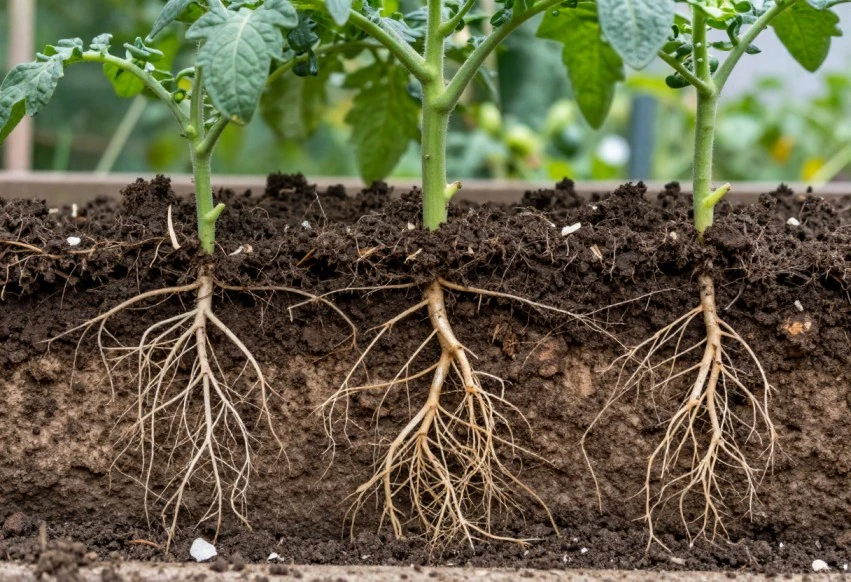
Have you ever wondered how deep do tomato roots grow? Knowing this can make a big difference in how you care for your plants, helping you water correctly, choose the right soil depth, and ultimately boost your tomato harvest.
If you want your tomatoes to thrive, understanding their root system is key. You’ll discover just how far those roots reach beneath the soil and what that means for watering, fertilizing, and planting. Keep reading to unlock the secrets that will help your tomato plants grow stronger and healthier than ever.
Understanding tomato root depth also helps gardeners choose better container sizes, improve watering habits, and avoid common root-related problems that can reduce plant growth and fruit production.

Tomato roots are the hidden part of the plant that helps it grow strong. They take water and nutrients from the soil. Healthy roots mean healthy tomatoes. Understanding the roots gives clues on how deep they grow and how to care for them.
Roots also keep the plant stable in the ground. They spread out in the soil to gather what the plant needs. Knowing the types of roots and their growth stages helps gardeners support their tomato plants better.
Tomato plants have two main root types. The primary root grows straight down. It anchors the plant and reaches deep water. Secondary roots branch out from the primary root. They spread wide and help absorb nutrients near the surface.
Both root types work together. Primary roots dig deep for water during dry times. Secondary roots gather nutrients from the topsoil. This balance is important for strong tomato growth. Healthy secondary roots are especially important during the fruiting stage because they absorb most of the nutrients needed for tomato development.
Tomato roots grow in stages as the plant matures. At first, only the primary root develops. It grows downward quickly to find water. Next, secondary roots start to form. They spread out to increase nutrient absorption.
Roots grow faster in warm soil with enough moisture. During flowering and fruiting stages, roots expand more to meet the plant’s needs. Understanding these stages helps gardeners water and fertilize correctly.
Tomato roots do not grow too deep compared to some other plants. Their root systems spread both downward and outward. Knowing the average root depth helps gardeners provide the right care. It also helps in choosing the right container or bed for planting.
The root depth varies but usually stays within a certain range. This range depends on soil type, watering, and other factors. Understanding these details can lead to healthier tomato plants and better harvests.
Tomato roots typically grow between 12 and 24 inches deep in garden soil. Most roots stay closer to the surface because that area has more oxygen and nutrients. The roots spread widely to collect water and nutrients. The main root system forms a dense network near the top 12 inches of soil. In loose, nutrient-rich soil, some tomato roots may extend even deeper in search of water during hot weather.
Soil type affects how deep roots can grow. Sandy soils allow roots to go deeper. Clay soils tend to keep roots more shallow. Watering frequency also matters. Frequent shallow watering encourages roots to stay near the surface. Deep, infrequent watering helps roots grow deeper. Temperature and soil compaction also play a role. Warmer, loose soil encourages deeper root growth.
Soil type plays a big role in how deep tomato roots grow. Different soils offer different challenges and benefits. The roots must push through the soil to find water and nutrients. Some soils let roots go deeper. Others keep roots closer to the surface.
Understanding soil types helps gardeners care for tomato plants better. The roots’ depth affects the plant’s health and yield. Knowing how soil impacts root growth can improve your gardening results.
Clay soil has tiny particles packed tightly together. This makes the soil dense and heavy. Tomato roots grow slowly in clay because it is hard to move through. Water drains slowly, which can cause root problems.
Sandy soil has larger particles and feels loose. Water drains quickly in sandy soil. Roots can grow deeper more easily here. But sandy soil may not hold enough nutrients for tomatoes.
Roots struggle to penetrate dense clay soil. They often stay near the surface. This limits the plant’s access to water during dry times. In sandy soil, roots can reach deeper layers. This helps tomatoes survive dry periods better.
Soil structure affects how strong and healthy roots become. Looser soils promote better root spread and depth. Compact soils restrict root growth and plant stability. Gardeners should choose soil types wisely for tomatoes.
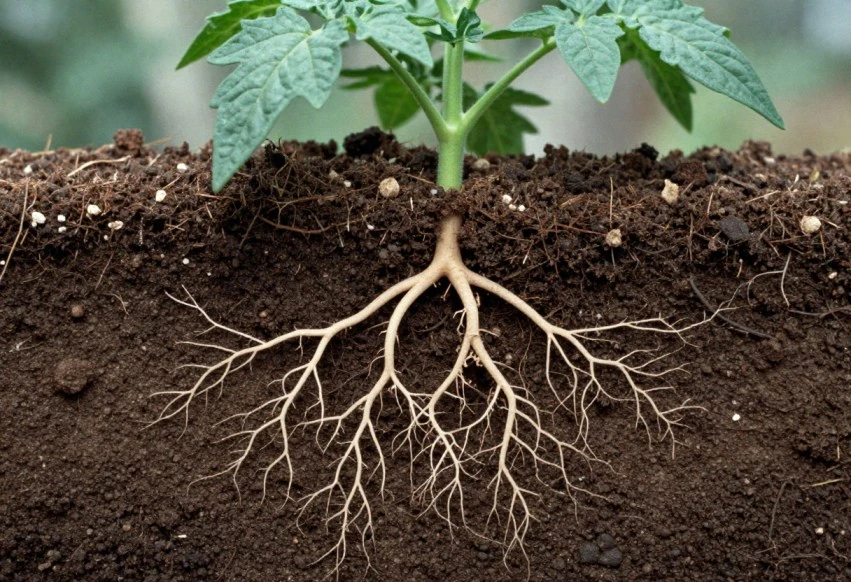
Watering plays a big role in how tomato roots grow. The amount of water affects root depth and strength. Roots search for moisture in the soil. Proper watering encourages deeper root growth. This helps tomato plants get more nutrients and stay healthy.
Tomato roots grow where water is available. Too much water keeps roots near the surface. This makes roots weak and shallow. Too little water makes roots dry and damaged. Moderate, steady moisture helps roots grow deep. Deep roots find water during dry times. This keeps the plant strong and alive.
Water tomatoes deeply but less often. This trains roots to grow downwards. Use a drip system or soak the soil well. Avoid light, frequent watering. Mulch helps keep soil moist longer. Water early in the morning or late in the evening. This reduces evaporation and saves water. Deep roots support larger and healthier tomatoes. Consistent deep watering also helps tomato plants become more drought-resistant during long periods of hot weather.
Tomato roots play a key role in nutrient uptake. The deeper and stronger the roots, the better the plant absorbs water and minerals. Healthy roots help tomato plants grow bigger and produce more fruit. They spread out underground, searching for nutrients essential for growth.
Roots absorb nitrogen, phosphorus, potassium, and other minerals. These nutrients support leaf development, flower formation, and fruit ripening. Without strong roots, tomato plants may struggle to get enough food. Understanding root function helps gardeners improve plant health and yield.
Roots act like straws, pulling nutrients from the soil. They take up water, which carries dissolved minerals to the plant. Root hairs increase surface area, making absorption more efficient. Nutrients move from roots to stems, leaves, and fruits. This process fuels photosynthesis and energy production.
Roots also store some nutrients for later use. They help the plant survive dry or poor soil conditions. Strong roots mean the plant can support bigger fruits. Weak roots limit nutrient uptake and stunt plant growth.
Provide loose, well-drained soil for roots to grow easily. Avoid compacted soil that blocks root expansion. Water deeply but less often to encourage roots to grow downward. Use balanced fertilizer to supply essential nutrients.
Mulch around the base to keep soil moist and cool. Avoid overwatering, which can cause root rot. Space plants properly to reduce competition for nutrients. Healthy roots lead to healthy, productive tomato plants.
Adding compost before planting can also improve soil structure and encourage deeper root penetration. Organic matter increases moisture retention while still allowing proper drainage.
Tomato roots face many challenges that affect plant health and growth. These problems can stop roots from growing deep and strong. Understanding root issues helps keep tomato plants healthy and productive.
Tomato roots can get sick from fungi and bacteria. Root rot is a common disease that makes roots soft and dark. This stops the plant from taking water and nutrients. Wilt diseases also attack roots, causing leaves to droop and die.
Poor soil drainage often causes these diseases. Wet soil lets fungi grow fast. Using clean soil and proper watering helps prevent root diseases. Removing infected plants stops the spread of disease.
Roots grow in tight spaces when plants stay too long in pots. This is called being root-bound. Roots circle inside the pot and stop growing downward. This limits water and nutrient uptake.
To fix this, gently loosen roots before planting in the ground. Choose bigger pots if growing tomatoes in containers. Root-bound plants recover faster with good care and space. Severely root-bound plants may show slow growth, yellow leaves, and reduced fruit production if not corrected before transplanting.
Root pruning and transplanting are key steps in growing healthy tomato plants. Managing roots helps plants grow strong and produce better fruits. Knowing when and how to prune roots and transplant seedlings can improve growth. These tasks encourage root systems to expand and absorb more nutrients.
Prune roots before transplanting tomato seedlings. Roots grow long and can tangle in small containers. Trimming them prevents damage during transplant. Cut roots gently, removing only about one-third. Do this when seedlings have two to three true leaves. Root pruning helps new roots grow thicker and stronger. It also stops plants from becoming root-bound. Healthy roots support better water and nutrient uptake.
Choose a cloudy day or early morning to transplant. This reduces stress on the plant. Dig a hole larger than the root ball. Place the seedling carefully, spreading roots outward. Cover roots with soil and press gently to remove air pockets. Water the plant immediately after transplanting. Mulch around the base to keep soil moist. Avoid deep planting to prevent stem rot. Proper transplanting helps roots settle quickly in new soil.

Tomato plants have different root depths depending on their variety. Some types grow roots that go deep into the soil. These deep roots help the plant find water and nutrients far below the surface. Choosing varieties with deeper roots can make your tomato plants stronger and more resistant to drought.
Heirloom tomatoes often have deep roots. They have grown in natural conditions for many years. This helps them adapt and develop strong root systems. Hybrid tomatoes are bred for size and yield. Their roots may not grow as deep as heirlooms. But hybrids often grow faster and resist diseases better.
Some tomato varieties are known for deep roots. Look for types labeled as “deep-rooted” or “drought-tolerant.” Seeds catalogs and garden centers can help with this. Planting deep-rooted tomatoes helps during dry spells. Deep roots allow the plant to reach water below dry soil. This keeps the plant healthy and producing fruit.
Tomato roots usually grow 12 to 24 inches deep in loose soil, but can extend deeper in soft ground.
Tomato roots in containers grow shallower, often staying within 12 to 18 inches due to pot size limits.
Tomato roots spread wide near the soil surface but also grow deep to find water and nutrients.
Loose, well-drained soil lets tomato roots grow deeper; compact or clay soil limits root depth and spread.
Water tomato plants deeply to encourage roots to grow deeper, improving plant strength and drought resistance.
Yes. Deep tomato roots can access moisture stored farther below the soil surface, helping plants survive dry conditions and maintain healthier growth during hot weather.
Tomato roots usually grow deep to find water and nutrients. Knowing root depth helps you water plants properly. Shallow watering can make roots weak and small. Deep roots support healthy growth and better fruit. Give tomatoes enough space to spread their roots.
Good soil and regular watering keep roots strong. Healthy roots mean stronger plants and bigger tomatoes. Keep these tips in mind for your garden success. Growing tomatoes well starts from the roots up.