
Gardening Made Simple.
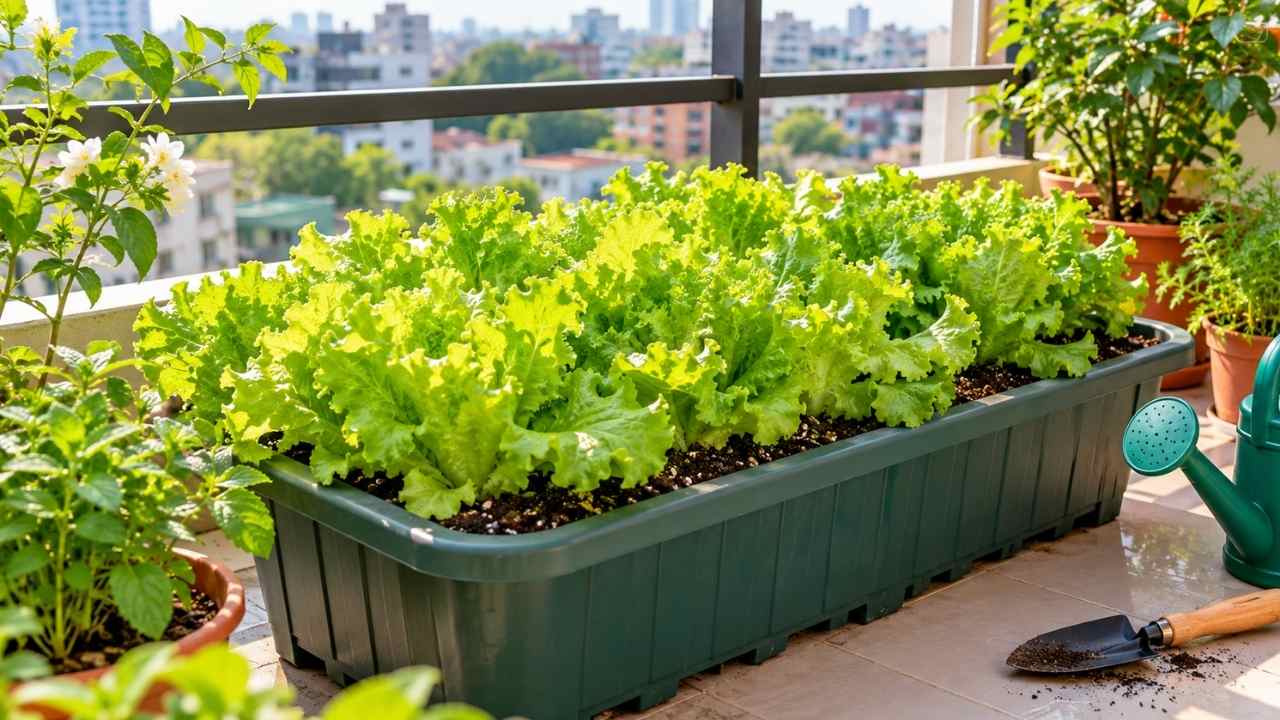
How to grow lettuce in containers starts with one simple rule: give shallow-rooted lettuce a wide container, loose potting mix and steady moisture. In practice, a planter at least 6 inches deep and 12 inches wide can support several plants on a patio, balcony or sunny windowsill. With 4 to 6 hours of light, cool temperatures and regular harvesting, you can grow fresh leaves without a garden bed.
Container lettuce is especially useful for busy gardeners because the crop needs little space. In addition, the first outer leaves can be harvested about 4 to 6 weeks after sowing. The most reliable approach is to grow loose-leaf or baby-leaf varieties, then cut a small amount whenever you need it.
To grow lettuce in containers successfully, choose a wide planter with drainage, fill it with lightweight potting mix, sow seeds shallowly and keep the soil evenly moist. In addition, lettuce prefers cool conditions between 60°F and 75°F, plus 4 to 6 hours of daily light. However, afternoon shade can help prevent bitter leaves in hot climates.
The container method works because lettuce has shallow roots. Therefore, a deep pot is not essential, but adequate width gives the leaves room to develop and makes watering more forgiving. For a busy gardener, one 12-inch planter can provide a practical supply of baby leaves without requiring daily garden-bed maintenance.
Loose-leaf lettuce is usually the easiest choice for containers. It can be harvested gradually rather than waiting for every plant to form a full head. Full-head varieties also work, although they need more space between plants and may provide only one main harvest.
A lettuce container should be at least 6 inches deep and 12 inches wide. The depth supports the crop’s shallow root system, while the width provides room for multiple plants or a cut-and-come-again planting. Pots, fabric grow bags and planter boxes can all work when excess water can escape freely.
Drainage is the feature that matters most. Before adding soil, check that the container has open holes at the bottom. Otherwise, a decorative pot without drainage can hold water around the roots, reduce air in the mix and increase the risk of weak growth or root problems.
| Container option | Best use | What to check |
|---|---|---|
| 12-inch pot | A small group of loose-leaf plants | At least 6 inches deep with bottom drainage |
| Fabric grow bag | Flexible placement on patios or balconies | Stable positioning and regular moisture |
| Planter box | Several plants or a baby-leaf mix | Drainage across the base and enough width |
A wide container is often better than an unusually deep one. For example, a 12-inch-wide planter may produce more useful leaves than a narrow deep pot because lettuce needs horizontal space for several plants. Therefore, place the container where it can be reached easily, since convenient access makes regular harvesting and watering more likely.
A very small pot can dry out quickly and leave little room for healthy spacing. For that reason, avoid using a container that is both shallow and narrow. A windowsill planter can work if it meets the 6-inch depth guideline and receives enough light without becoming overheated behind glass.
Lettuce needs a lightweight, well-draining potting mix rather than dense native garden soil. In a container, garden soil can compact, restrict air movement and make water drain unevenly. Consequently, a quality organic potting mix gives the roots a looser growing environment while helping the container remain manageable.
Before planting, fill the container almost to the top and leave a small gap so water does not immediately run over the rim. Compost or worm castings can be mixed into the potting medium to support leafy growth. Alternatively, a slow-release nitrogen fertilizer is another option when the product label recommends it for edible crops.
More fertilizer is not always better. In fact, excess nitrogen can encourage soft growth while creating unnecessary runoff. For a small planter, follow the label rate rather than estimating by eye. The goal is steady leaf production, not rapid growth that becomes difficult to manage in warm weather.
Budget-conscious gardeners can use one dependable potting mix for several containers instead of blending many ingredients. If compost is added, mix it evenly through the potting medium. However, avoid filling the entire pot with compost because it can retain too much moisture or settle unevenly after watering.
Scatter loose-leaf or baby lettuce seeds evenly across the surface of the damp potting mix. Then cover them lightly with about 1/4 inch of soil. Lettuce seeds need some light to germinate properly, so a deep covering can delay emergence or reduce the number of seedlings that appear.
Press the surface gently after sowing so the seeds make contact with the mix. Next, water with a gentle spray rather than a strong stream. A forceful flow can move the seeds into one corner of the container and create uneven rows.
Cool conditions support germination. Aim for approximately 60°F to 75°F, or 15°C to 24°C. If the container sits in a hot location, move it away from intense afternoon heat until seedlings are established. Therefore, a bright, cooler windowsill may be more suitable than a warm enclosed porch.
Thin seedlings to about 4 to 8 inches apart when growing full heads. The exact distance depends on the variety and the size of head you want. Meanwhile, baby-leaf crops can remain closer together because the leaves are harvested young before the plants need as much room.
Thinning may feel wasteful, but crowded lettuce competes for light, water and nutrients. Remove the weakest seedlings with clean scissors or lift them carefully when the mix is moist. As a practical option, sow one section for baby leaves and leave another section spaced for larger plants.
For a busy household, staggered sowing is more useful than planting a large amount at once. Sow a small area, then repeat after the first planting becomes established. As a result, the harvest spreads out and the chance of having more lettuce ready than you can use becomes smaller.
Place the container where lettuce receives 4 to 6 hours of sunlight each day. Morning light is helpful in hot climates because it provides brightness without exposing the plants to the strongest afternoon heat. Additionally, some afternoon shade can reduce heat stress and help delay bolting.
Bolting happens when lettuce sends up a flower stalk. After flowering begins, the leaves can become bitter. Heat and dry conditions often speed up this change, so moving a balcony planter into afternoon shade may extend the useful harvest.
Water whenever the surface begins to dry, keeping the mix consistently moist. Warm or windy weather can increase water loss, making daily watering necessary. Instead of watering automatically, check the soil with a finger. If the top layer feels damp, wait and inspect again later.
Water slowly until a little moisture drains from the bottom. This helps wet the full container rather than only the upper layer. After heavy watering, empty standing water from a saucer, since lettuce roots should not remain in a tray of water.
| Growing condition | Practical target | Adjustment for hot weather |
|---|---|---|
| Light | 4 to 6 hours daily | Provide afternoon shade |
| Temperature | 60°F to 75°F | Move the planter to a cooler position |
| Moisture | Consistently moist soil | Check more often during wind or heat |
Gardeners working long hours can place the container near the main entrance or kitchen window. In this way, visibility matters. A planter that is easy to see is less likely to be forgotten during a dry spell, especially when the weather changes quickly.
Begin harvesting outer leaves about 4 to 6 weeks after sowing. Use clean scissors or a sharp knife and remove only the leaves you need. Meanwhile, leave the inner leaves and growing point intact so the plant can continue producing new foliage.
This cut-and-come-again method suits containers because it creates repeated small harvests instead of one large crop. Furthermore, harvesting in the morning can help the leaves remain crisp, especially when the container has been watered the previous evening.
Do not wait for every plant to reach the same size. Young leaves are tender and useful for salads or sandwiches, while larger outer leaves can be picked before they become tough. If a plant starts forming a central flower stalk, harvest the remaining usable leaves promptly because bitterness may increase.
A simple harvest routine takes only a few minutes. First, inspect the outer leaves, remove damaged foliage and cut cleanly above the crown. Then keep harvested leaves cool and rinse them shortly before use to preserve texture.
Most container lettuce problems come from small setup errors rather than complicated growing conditions. For example, a pot without drainage, heavy garden soil or irregular watering can cause more trouble than the choice of lettuce variety. Correcting the container and moisture routine often improves growth without adding extra products.
One common misunderstanding is that more sunlight always produces better lettuce. Although lettuce needs light, intense heat can shorten the harvest window. Therefore, a bright location with afternoon protection may outperform a hotter position that receives strong sun all day.
Another mistake is harvesting every leaf at once. Instead, cutting the outer leaves first keeps the centre growing and makes a single container more productive over time. For gardeners with limited space, that harvesting habit can matter as much as the container size.
The best container setup depends on how quickly you want to harvest and how much daily care you can provide. A full-head planting needs more spacing and patience. By contrast, a baby-leaf mix gives faster access to small leaves but may need closer monitoring because the crop is denser.
| Approach | Choose it when | Advantage | Limitation |
|---|---|---|---|
| Full heads | You want larger individual plants | Clear spacing and a substantial harvest | Requires 4 to 8 inches between plants |
| Baby leaves | You need quick, repeated picking | Efficient use of container width | Dense growth needs careful moisture management |
| Cut-and-come-again | You want small harvests over time | Inner leaves keep producing | Plants need clean, selective harvesting |
For a small balcony, a single wide planter with loose-leaf lettuce is usually the most practical starting point. Meanwhile, someone with a sunny patio can use several containers and stagger sowing. On a windowsill, choose fewer plants and watch for heat buildup behind the glass.
Container gardening can also become part of a wider small-space growing routine. Readers exploring other compact food-growing projects may find the Black Pearl Oyster Mushroom resource useful for a separate indoor cultivation idea, although mushrooms require different growing conditions from lettuce.
A short preparation checklist prevents most avoidable problems. Before sowing, confirm the container size, drainage, potting mix, seed depth and growing position. Doing these checks first is faster than trying to correct compacted soil or poor light after seedlings have already emerged.
For additional information about potting choices and planting timing, compare current recommendations from The Old Farmer’s Almanac lettuce resource. In addition, product labels and local growing conditions should guide fertilizer use, especially when temperatures rise or the container is placed indoors.
Yes. A container at least 6 inches deep is suitable for lettuce because its roots are shallow. However, choose a wider pot if you want several plants.
Keep the mix consistently moist and check it frequently. Warm or windy weather may require daily watering, while cooler conditions usually reduce water loss.
A sunny windowsill can work when it provides 4 to 6 hours of light and does not become excessively hot. If growth leans toward the glass, rotate the container.
Heat and bolting are common causes. Therefore, provide afternoon shade, maintain steady moisture and harvest leaves before the plant develops a tall flower stalk.
Cover them lightly with about 1/4 inch of soil. Since lettuce seeds need some light during germination, deep planting can reduce emergence.
Loose-leaf lettuce can provide repeated harvests. Cut the outer leaves first, but leave the centre intact so new leaves can continue forming.
Compost or worm castings can support growth. However, a suitable slow-release nitrogen fertilizer may also be used according to its label.
Loose-leaf or baby-leaf lettuce is often the most convenient because you can harvest small amounts without waiting for every plant to form a full head.
Growing lettuce in containers becomes straightforward when the basics stay consistent: use a wide container with drainage, choose a loose potting mix, sow seeds shallowly and protect the plants from excessive heat. Above all, regular moisture matters more than complicated equipment.
Start with one well-positioned planter and harvest outer leaves gradually. Before planting, check the container and product labels carefully. Potting ingredients, fertilizer guidance and local planting conditions can change, so verify those details with current manufacturer instructions or trusted horticultural sources.
Information check: Container dimensions, planting guidance and care recommendations may need review as products and local conditions change. Last verified: October.
Subscribe to the blog and newsletter to get new updates in simple, clear words straight to your inbox.
Recent Articles
Related Articles
Keengarden is your simple, friendly guide to growing healthy plants, fixing garden problems, and choosing the right tools.
© 2025 keengarden. All rights reserved. Designed by Affpilot