Gardening Made Simple.
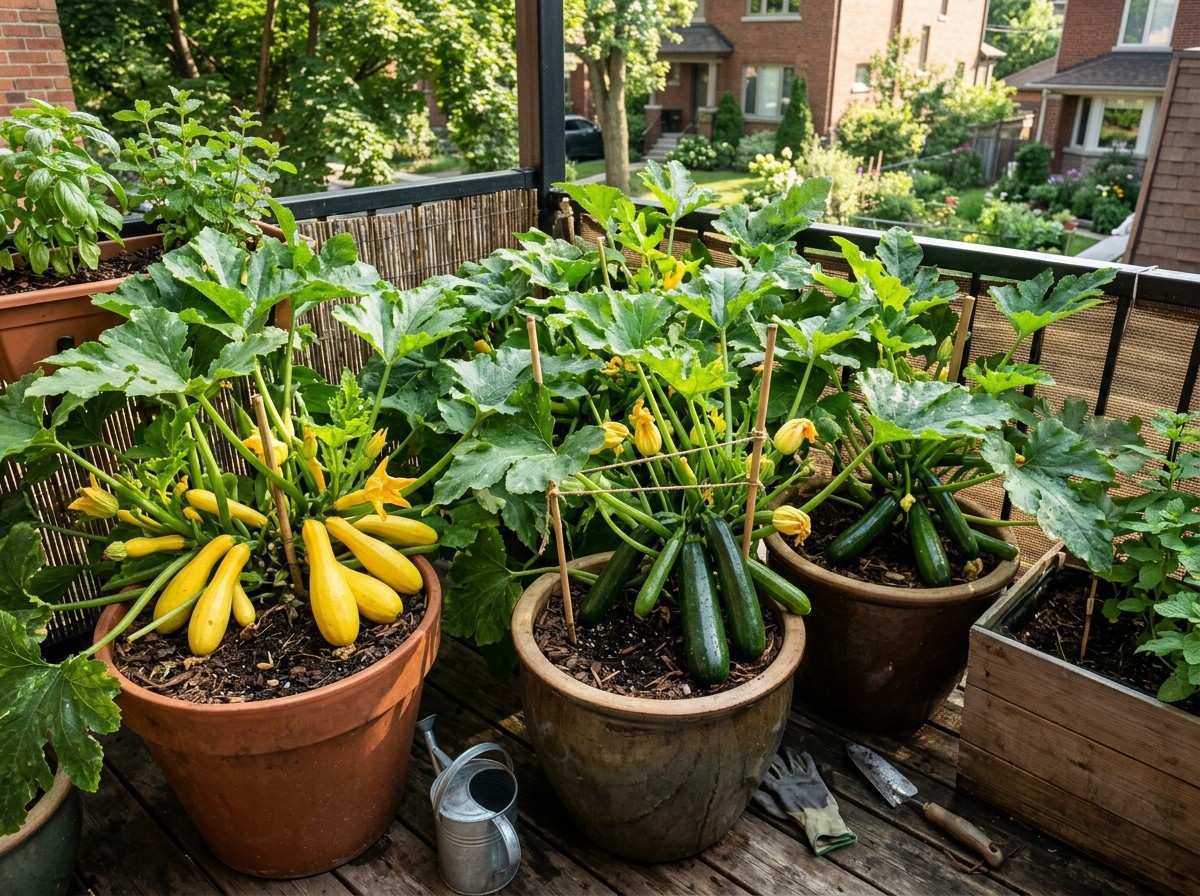
Growing your own vegetables is a satisfying experience, but not everyone has a big garden. If you have only a balcony, patio, or a small yard, you can still enjoy fresh summer squash by Growing Summer Squash in Containers.
This space-saving method allows gardeners with limited room to harvest healthy, delicious squash throughout the growing season while enjoying the convenience of container gardening.
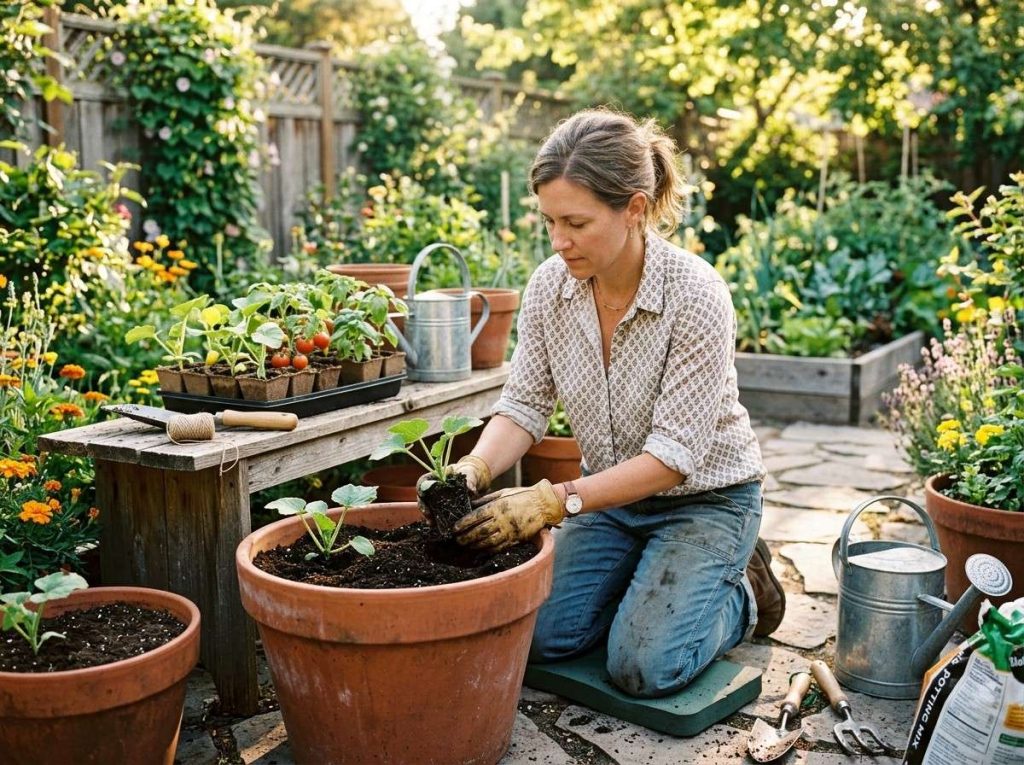
It also gives you more control over soil, pests, and watering. Whether you are a beginner or have tried container gardening before, this guide will help you succeed with summer squash.
Growing summer squash in containers has many advantages. First, you can place containers in sunny spots, even if your yard is mostly shaded. Containers also help manage pests and diseases, which are common problems in open gardens. You can move pots if the weather turns bad or if your plants need more sun. For people with physical limitations, container gardening can be easier to manage because you can place pots at a comfortable height.
Another benefit is that you can start with good-quality, pest-free soil. Containers stop squash from spreading too far, which is useful since these plants can be vigorous. Plus, it’s easier to control watering and feeding in pots, leading to healthier plants and better harvests.
Not every squash grows well in a container. Some types are better suited because they stay compact or are bred specifically for small spaces. Here are top choices for container gardening:
Tip: Avoid “vining” types like some crookneck or spaghetti squash. Look for “bush” or “patio” in the name for best results.
Container size and material have a big impact on your squash’s health and productivity. Squash need space for their roots to grow and plenty of water.
Larger containers support bigger plants and reduce stress from drying out. Small containers limit growth and make plants dry out quickly.
Make sure your container has drainage holes to prevent waterlogging, which can cause root rot.
Soil is the foundation of success. Garden dirt is usually too heavy for pots and can contain pests or diseases. Instead, use a quality potting mix.
A simple mix for containers:
Avoid using only garden soil, which compacts and chokes roots.
For better results, add:
Timing, seed depth, and spacing matter for healthy plants and strong yields.
Tip: Squash dislike root disturbance. If transplanting, use biodegradable pots to reduce shock.
Container-grown squash need consistent moisture, but not soggy roots.
Water deeply until it drains from the bottom. Shallow watering leads to weak roots.
Non-obvious insight: Early morning is the best time to water. Evening watering keeps leaves wet overnight, increasing disease risk.
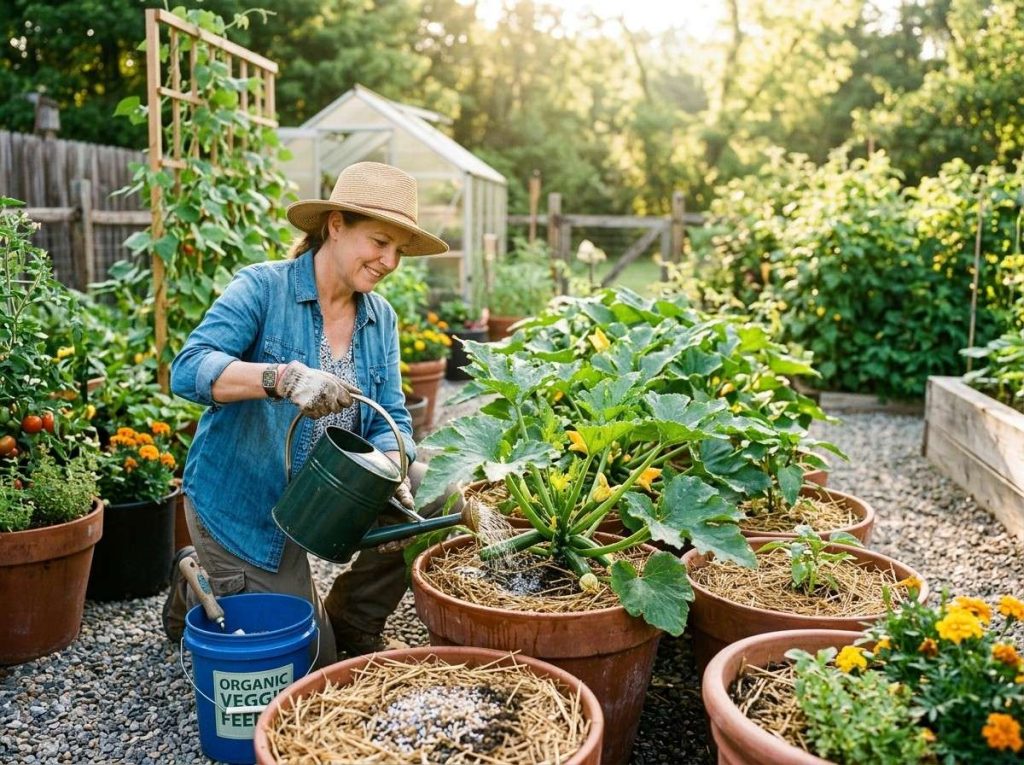
Squash are heavy feeders. Container soil loses nutrients faster than garden beds.
Stop feeding when plants are covered with fruit, or growth will go to leaves instead of squash.
| Growth Stage | Fertilizer Type | Frequency |
|---|---|---|
| Planting | Slow-release granular | Once |
| Early growth | Balanced liquid (10-10-10) | Every 2 weeks |
| Flowering/Fruiting | High P & K (5-10-10) | Every 2 weeks |
Tip: Too much nitrogen means big leaves, not more squash.
Squash love warmth and light. Give them what they need to thrive.
Non-obvious insight: Reflective mulch (like aluminum foil under the plant) can increase light and warmth in cooler climates.
Most summer squash are bushy, but some have longer stems. In containers, plants can flop over. Support helps keep plants healthy and fruit clean.
Supporting plants increases air flow, reducing diseases like powdery mildew.
| Type | Growth Habit | Container Suitability |
|---|---|---|
| Bush | Compact, upright | Excellent |
| Semi-vining | Short trailing stems | Good with support |
| Vining | Long, spreading vines | Poor |
Even in containers, squash can face issues. Knowing what to look for helps you act fast.
| Problem | Cause | Solution |
|---|---|---|
| Yellow leaves | Overwatering, nutrient shortage | Reduce water, add balanced fertilizer |
| Wilting at midday | Heat stress, dry soil | Move to shade, check soil moisture |
| Poor fruit set | Lack of pollinators | Hand-pollinate flowers |
Harvesting at the right time makes a big difference in taste and texture.
Tip: Frequent harvesting encourages more squash to grow.
Space and soil are limited, so you need strategies for the best harvest.
Experience-based guide: Many beginners overestimate how many plants they need. One healthy plant in a 7–10 gallon container can give 10–20 fruits per season. Plant more only if you have space and can keep up with care.
Summer squash are annuals, so they finish their life in one season. At the end of the season:
Tip: Store containers upside down to prevent water collecting and mosquitoes breeding.
You don’t need to buy expensive pots to grow squash. Try these ideas:
Decorate containers to add color to your patio, or plant edible flowers like nasturtiums nearby for a beautiful, productive space.
Container gardening can be eco-friendly:
By following these practices, you reduce your environmental footprint and grow healthier food.
How does squash stack up against other popular vegetables for containers? Here’s a quick look.
| Vegetable | Container Size Needed | Ease of Growth | Yield per Plant |
|---|---|---|---|
| Summer Squash | 5–10 gallons | Moderate | 10–20 fruits |
| Tomato | 5–15 gallons | Challenging | 15–25 fruits |
| Peppers | 3–5 gallons | Easy | 5–10 fruits |
| Lettuce | 2–3 gallons | Easy | Multiple leaves |
Squash require a bit more space and care but reward you with a big harvest.
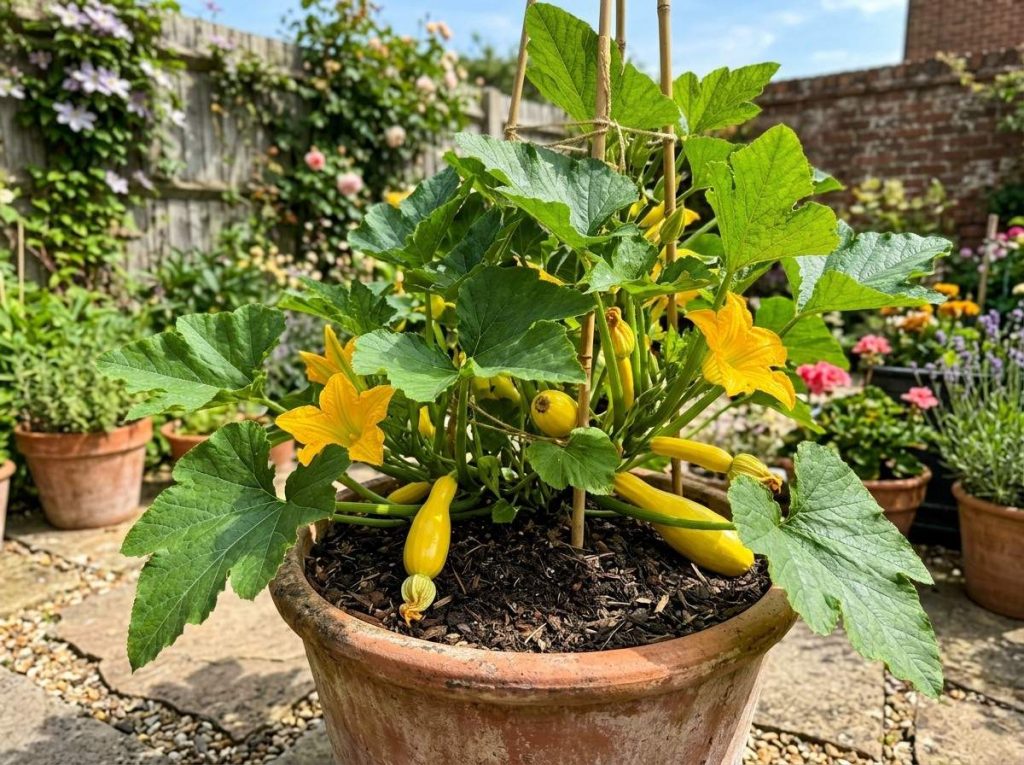
For best results, plant one squash plant per 10-gallon container. This gives enough root space and air flow. In a pinch, you can try two, but yields per plant may drop, and disease risk increases.
Yes, most summer squash need pollination to set fruit. If bees are not present, use a small paintbrush to transfer pollen from male to female flowers. This is important on balconies or indoors where pollinators are scarce.
Use a balanced fertilizer at planting, then switch to a liquid fertilizer higher in phosphorus and potassium (like 5-10-10) when plants start to flower. Organic choices include fish emulsion and compost tea. Avoid too much nitrogen, which causes leafy growth but fewer fruits.
You can try, but squash need lots of sun. Use a strong grow light (at least 12 hours a day) and give each plant a large container. Pollinate flowers by hand. Indoor squash usually produce less fruit than outdoor plants.
Most summer squash are ready to harvest 45–60 days after planting seeds. Fruit grows quickly, so check plants every couple of days once they start producing.
Growing summer squash in containers is a practical and rewarding way to enjoy homegrown vegetables, even if you lack a garden. With the right container, soil, and care, you can harvest fresh, tasty squash all summer. Remember, healthy plants start with good soil and enough space. Watch your plants closely, adjust your care as needed, and enjoy the beauty and flavor of your own container-grown summer squash. For more tips and detailed planting calendars, you can visit the University of Minnesota Extension website. Happy gardening!