
Gardening Made Simple.
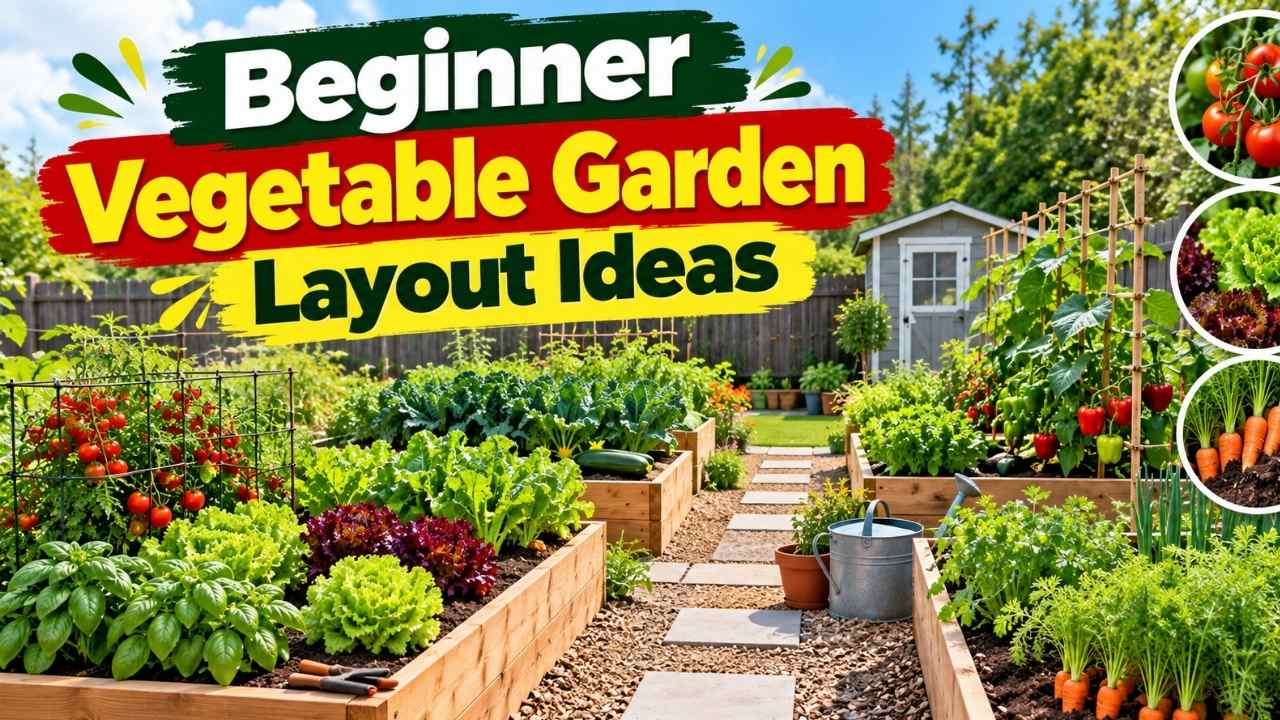
Beginner vegetable garden layout ideas work best when they match your space, sunlight and daily access. For most new gardeners, a 4×8-foot raised bed or a 10×10-foot in-ground plot offers a practical starting point. Therefore, keep beds 3–4 feet wide, place tall crops on the north side and group plants with similar sun and water needs.
The best beginner vegetable garden layout ideas are the 4×8 raised bed, the 4×4 square-foot grid, the north-to-south row plot and the container cluster. Choose one according to available space, soil condition and how easily you can reach every plant.
A beginner does not need a large garden. Instead, a compact layout can produce useful harvests while keeping watering, weeding and soil preparation manageable. In urban Bangladesh, where available growing space may be limited, a 4×4 bed or container cluster can be more practical than a large field-style plot.
Cost also matters. For example, a raised bed may need a frame and prepared soil, while an in-ground plot needs less construction but may require more work to improve native soil. Containers cost more per plant in some situations, yet they can be moved or rearranged without digging.
Read More:When to plant tomatoes in Texas
A 4×8 raised bed is an efficient beginner vegetable garden layout because its 4-foot width allows access from both long sides. To organize mixed crops without stepping on the soil, divide the bed into four sections or use a 1×1-foot grid.
This layout suits small backyards, poor native soil and gardens where weed control needs close attention. Additionally, the 8-foot length provides enough room for several crop groups while remaining easy to inspect during watering and harvesting.
For example, one section can hold lettuce and radishes. Another can contain carrots. Reserve space for a couple of tomato plants and leave room for supports. Although the exact crop arrangement can change with the season, the reach-friendly structure remains useful.
| Bed area | Possible crop group | Why it helps beginners |
|---|---|---|
| First quarter | Lettuce and leafy greens | Frequent harvesting is easy |
| Second quarter | Radishes | Small plants fit closely |
| Third quarter | Carrots | Root crops stay organized |
| Final quarter | Two tomato plants | Supports can be placed at the edge |
Keep taller crops toward the north side of the bed. As a result, that placement reduces the risk of tomatoes or pole beans shading shorter crops during the day. Before building, measure the space and mark the walking sides so the finished bed does not become difficult to reach.
A 4×4-foot bed divided into sixteen 12-inch squares is one of the simplest beginner vegetable garden layout ideas for limited space. Each square becomes a small planting zone, which makes spacing easier to understand and helps prevent random overcrowding.
The standard planting pattern is based on plant size. Large plants may use one per square. Medium plants may use four. Meanwhile, smaller crops can fit nine or sixteen per square when their mature size allows it.
This approach is particularly helpful for a balcony or a very small courtyard. At a glance, a gardener can see the entire bed and replace one square without disturbing the rest. Consequently, the layout feels less intimidating during the first growing season.
However, the grid should not become a rigid rule. Mature plant size still matters. A tomato needs more room than a radish, even when both are placed inside the same 12-inch framework.
A 10×10-foot in-ground plot is suitable when you want traditional rows and have enough open ground. Arrange the rows from north to south, then place tall crops at the north end so shorter plants receive more direct light.
For instance, place corn, trellised peas and pole beans toward the north side. Put spinach, lettuce and bush beans toward the south side. This north-to-south arrangement is a central principle in beginner vegetable garden layout ideas because it manages shade without complicated planning.
Leave clear walking space between rows. Although a plot may look efficient on paper, it can become frustrating when plants spread into the paths. Small tools should be usable without crushing nearby seedlings or forcing you to step into cultivated soil.
A 10×10-foot plot also requires more consistent maintenance than a compact raised bed. Weeding takes longer. Watering covers a wider area. For that reason, divide the plot into visible crop groups instead of planting one continuous block of mixed vegetables.
A container and patio cluster is a flexible beginner vegetable garden layout for renters, concrete patios and zero-dig spaces. Start with five to ten independent large pots, then arrange them according to sunlight, crop size and distance from the kitchen.
Use 10–20-gallon containers for tomatoes or zucchini. Smaller pots can hold herbs and greens. For better use of sunlight, place peppers and tomatoes together in the sunniest location. Keep basil and parsley near the kitchen door so regular harvesting takes little effort.
Containers offer clear advantages. You can move them, isolate a plant and avoid preparing native soil. They also make the garden easier to rearrange when a sunny area changes during the season.
| Layout choice | Main advantage | Possible limitation |
|---|---|---|
| 4×8 raised bed | Good access and weed control | Needs a frame and prepared soil |
| 4×4 square-foot grid | Simple spacing in a small area | Large plants need careful planning |
| 10×10 in-ground plot | Supports traditional rows | Requires more maintenance space |
| Container cluster | Works without digging | Large crops need large containers |
Container gardens do have trade-offs. Pots can dry out faster than ground beds, and large crops need stable support. Therefore, check drainage before planting, then place containers where their combined weight will not create a practical problem.
The most reliable beginner vegetable garden layout ideas follow four rules: provide enough sun, protect the soil from foot traffic, create usable paths and grow climbing crops vertically.
Choose a location with at least 6–8 hours of direct sunlight each day. Before building, observe the site carefully. A place that looks bright in the morning may become shaded later by a wall, roof or nearby structure.
Make garden beds no wider than 4 feet unless you can walk around every side. Otherwise, a wider bed often forces gardeners to step on the soil, which can compact the growing area and make planting harder.
Allow at least 18–24 inches for walking or kneeling with a small tool. Although this space may seem unused at first, it protects plants and gives you room to water, harvest and remove weeds.
Add trellises, stakes or cages for cucumbers, peas and pole beans. Vertical growing saves horizontal ground space. However, supports must be installed early so young plants can be guided without major disturbance.
The Royal Horticultural Society’s vegetable-growing guidance also emphasizes planning around available space, crop needs and practical access. Therefore, those principles are useful when adapting beginner vegetable garden layout ideas to an urban home.
Most first-season problems come from poor access rather than a lack of gardening enthusiasm. Even so, a beautiful plan can fail if the center of the bed cannot be reached or if tall crops block sunlight.
One useful test is the reach check. Stand outside each planned bed and extend your arm toward the center. If the soil cannot be reached comfortably from the available sides, reduce the width or add walk-around access.
Start with the layout that needs the fewest permanent materials. A small in-ground plot may reduce construction costs, while a raised bed can save time when native soil is poor. Containers offer flexibility but require suitable pots and enough growing medium.
For a low-cost urban setup, measure the available sunlight first. Then compare the price of a 4×4 bed with several large containers. Importantly, do not buy supports, frames or extra pots before deciding which crops will actually need them.
A practical sequence is simple:
For example, a gardener with a small sunny patio may spend less effort managing a cluster of large pots than preparing a full plot. By contrast, another gardener with open ground and poor native soil may prefer a raised bed despite the initial frame cost.
Choose a 4×8 raised bed for a small backyard or poor soil. Select a 4×4 grid when space is extremely limited. Use a 10×10 row plot for traditional in-ground gardening. Alternatively, pick containers when digging is not practical.
| Your situation | Recommended layout | First planning priority |
|---|---|---|
| Small backyard | 4×8 raised bed | Reach and weed control |
| Balcony or tiny courtyard | 4×4 grid | Plant spacing |
| Open ground | 10×10 row plot | North-to-south orientation |
| Concrete patio or rental home | Container cluster | Sunlight and pot capacity |
The best beginner vegetable garden layout ideas are not the ones with the most plants. Instead, they are the ones that make every plant easy to reach, water and observe. A smaller plan that you can maintain consistently usually provides a better learning experience than an oversized garden.
A 4×8-foot raised bed is usually the easiest option because both long sides remain reachable. To organize lettuce, radishes, carrots and tomato plants, divide it into sections or a one-foot grid.
Keep the bed 3–4 feet wide. That width lets you reach the center without stepping on the soil. Wider beds need walk-around access on every side.
Place tomatoes, pole beans, corn and trellised peas on the north side. As a result, shorter crops such as spinach, lettuce and bush beans can receive more direct sunlight.
A 4×4-foot square-foot grid can suit a very small space. Alternatively, containers are useful when a balcony cannot support a full bed or when weight needs careful management.
Choose a location with at least 6–8 hours of direct sunlight each day. Check the site at different times because nearby buildings or walls may create afternoon shade.
Start with five to ten independent containers. Use 10–20-gallon pots for tomatoes or zucchini, then choose smaller pots for herbs and greens.
Yes. Trellises, stakes or cages help cucumbers, peas and pole beans grow upward. Install support early so the structure does not disturb established roots.
The most common mistake is making the bed too wide. If you cannot reach the center from outside the bed, regular care becomes difficult and the soil may be compacted.
For most beginners, a 4×8-foot raised bed offers the clearest balance of access, crop variety and weed control. If space is tighter, use a 4×4-foot grid or a small container cluster. With open ground, a 10×10-foot north-to-south plot is a sound alternative.
Before buying materials, measure the site, confirm 6–8 hours of sunlight and mark paths at least 18–24 inches wide. Then place tall crops on the north side and group plants by similar sun and water needs. In this way, that simple order prevents many expensive layout changes.
Subscribe to the blog and newsletter to get new updates in simple, clear words straight to your inbox.
Recent Articles
Related Articles

Keengarden is your simple, friendly guide to growing healthy plants, fixing garden problems, and choosing the right tools.
© 2025 keengarden. All rights reserved. Designed by Affpilot