Gardening Made Simple.
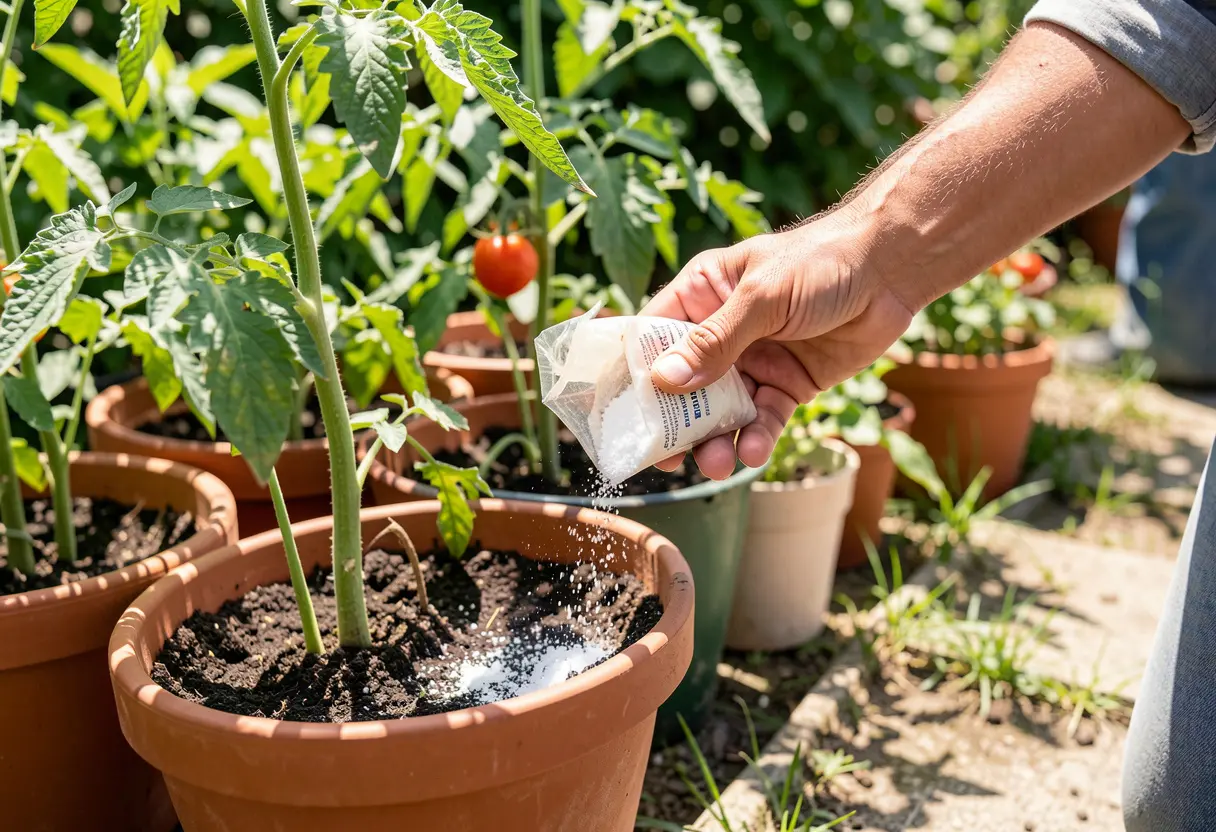
Are you looking for a simple way to boost your tomato plants and get bigger, healthier fruits? Using Epsom Salt for Tomato Plants might be the secret you’ve been missing. When applied correctly, it provides essential magnesium and sulfur, helping your tomatoes grow stronger, produce more fruit, and stay vibrant throughout the season.
This easy-to-use, natural mineral can help your tomatoes grow stronger and produce more. Imagine picking juicy, vibrant tomatoes right from your garden every week. Keep reading to discover how Epsom salt can transform your tomato plants and make your gardening efforts truly pay off.
Epsom salt is a helpful supplement for tomato plants. It contains magnesium and sulfur. These nutrients support healthy growth and fruit production. Using Epsom salt can improve tomato plant health and boost yields.
Magnesium in Epsom salt helps plants absorb nutrients better. It aids in the uptake of nitrogen and phosphorus. This makes nutrients more available to the plant roots. Strong nutrient absorption leads to greener leaves and healthier plants.
Epsom salt promotes sweeter and larger tomatoes. Magnesium plays a key role in photosynthesis. This process produces sugars that improve fruit taste. The result is tomatoes with better flavor and texture.
Sulfur in Epsom salt supports strong cell walls. This helps the plant stand firm against wind and rain. Healthy stems and leaves reduce the risk of damage. The plant grows more resilient and lasts longer in the garden.
Epsom salt is a helpful supplement for tomato plants. It provides magnesium and sulfur, two important nutrients. Knowing when to use Epsom salt helps your tomato plants grow healthy and strong. Different growth stages need different care. Using Epsom salt at the right time supports better growth and more fruit.
Seedlings need magnesium for strong roots and leaves. Adding a small amount of Epsom salt helps seedlings grow faster. Dissolve one teaspoon of Epsom salt in a gallon of water. Use this solution to water seedlings once a week. This gives young plants the nutrients they need early on.
Flowering and fruiting stages require more magnesium. Epsom salt helps flowers bloom and fruits develop well. Spray a mixture of one tablespoon of Epsom salt in a gallon of water on leaves. Do this every two weeks to improve fruit size and taste. Epsom salt supports strong, healthy tomatoes during this phase.
Watch for yellow leaves with green veins. This often means magnesium deficiency. Slow growth and weak stems can also signal a need for Epsom salt. If fruits are small or misshapen, magnesium might be low. Applying Epsom salt can fix these issues quickly. Check plants regularly to catch these signs early.
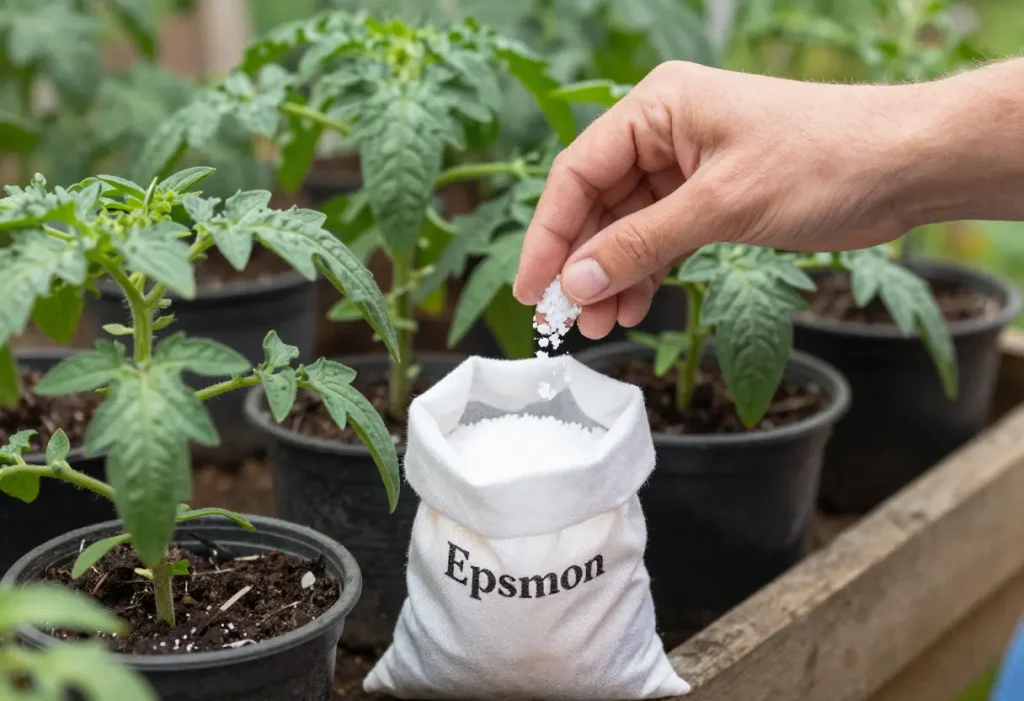
Applying Epsom salt to tomato plants helps improve growth and fruit production. It provides magnesium and sulfur, essential for healthy leaves and strong roots. There are easy ways to apply Epsom salt, either directly to the soil or as a spray on the leaves. Each method has its own benefits and steps to follow.
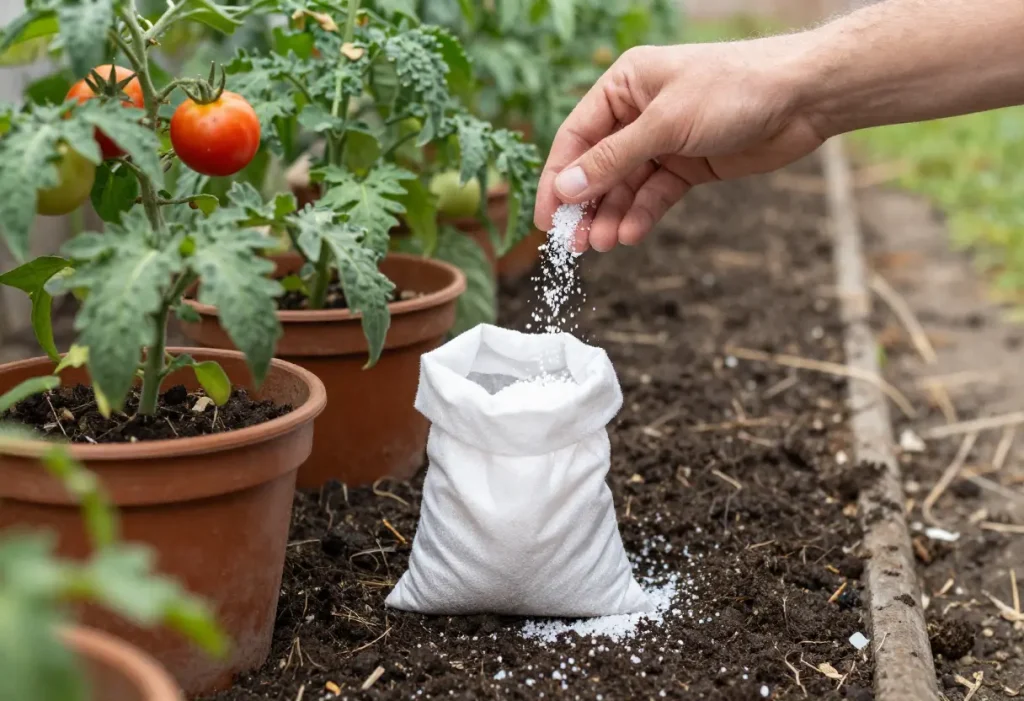
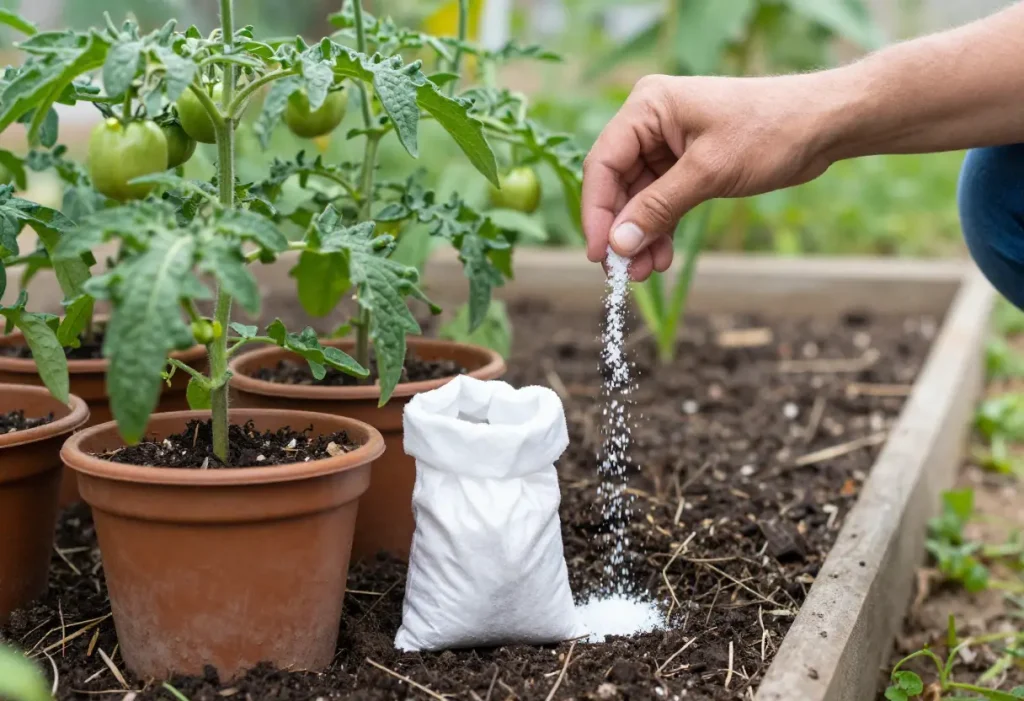
Mix 1 tablespoon of Epsom salt into a gallon of water. Pour this solution around the base of each tomato plant. This feeds the roots directly and helps the plant absorb nutrients faster. Another option is to sprinkle 1 tablespoon of dry Epsom salt around the plant’s base. Water the soil after to dissolve the salt and carry nutrients to roots.
Dissolve 1 tablespoon of Epsom salt in 1 gallon of water for spraying. Use a spray bottle to mist the leaves gently. Spray in the early morning or late evening to avoid leaf burn. The leaves absorb magnesium and sulfur quickly this way. This method works well during flowering and fruit development stages.
Apply Epsom salt every 2 to 4 weeks during the growing season. Avoid using too much salt, as it can harm plants. For soil amendment, stick to 1 tablespoon per plant per application. For foliar spray, apply once every two weeks. Regular use keeps tomato plants healthy and productive.
Using Epsom salt for tomato plants can improve growth and fruit quality. Still, it requires careful use to avoid problems. Understanding the risks and safety steps helps keep your plants healthy and strong.
Too much Epsom salt can harm tomato plants. It may cause leaf burn and yellowing. Excess magnesium blocks other nutrients. This leads to poor plant health and weak fruits. Use only the recommended amounts to protect your plants.
Epsom salt works well with some fertilizers but not all. Mixing it with fertilizers high in magnesium can cause nutrient imbalance. Avoid combining Epsom salt with products containing magnesium. Always check fertilizer labels before mixing.
Excess Epsom salt can harm soil and water. High magnesium levels affect soil life and nearby plants. Runoff may pollute water sources. Apply Epsom salt carefully and avoid overuse to protect the environment.
Many gardeners have seen great results using Epsom salt for tomato plants. These success stories show how this simple mineral can boost plant health and fruit production. Experts share tips to help you use Epsom salt in the best way. Learn from real experiences and practical advice to improve your tomato harvest.
Jane from Ohio added Epsom salt to her tomato soil twice a month. Her plants grew taller and greener. The tomatoes tasted sweeter and were bigger than last year. Mark in California used a spray of Epsom salt on leaves every two weeks. He noticed fewer pests and healthier foliage. Many gardeners say Epsom salt helps reduce blossom end rot. Small changes, big results.
Use one tablespoon of Epsom salt per plant at planting time. Mix it into the soil near roots. Repeat every four weeks for strong growth. Foliar spray works well too: dissolve one tablespoon in one gallon of water. Spray leaves in the morning or evening. Avoid overuse; too much salt can harm plants. Combine Epsom salt with balanced fertilizer for best results. Regular watering helps plants absorb magnesium efficiently.
Epsom salt provides magnesium and sulfur, which help tomato plants grow strong leaves and produce more fruit.
Use Epsom salt every 2-4 weeks during the growing season to support healthy growth and yield.
Yes, it can improve fruit size, taste, and color by boosting nutrient absorption in tomato plants.
Dissolve 1 tablespoon in a gallon of water and spray leaves or pour around the base.
Yes, in moderate amounts, Epsom salt is safe and helps prevent nutrient deficiencies in tomatoes.
Epsom salt helps tomato plants grow strong and healthy. It gives magnesium and sulfur, which plants need. Using it can improve leaf color and fruit size. Just sprinkle a little around the base of the plant. Water it in gently to help absorption.
Avoid using too much, as it may harm the plant. Regular care and Epsom salt can boost your tomato harvest. Try it to see better results in your garden. Simple and natural ways often bring the best outcomes.