
Gardening Made Simple.
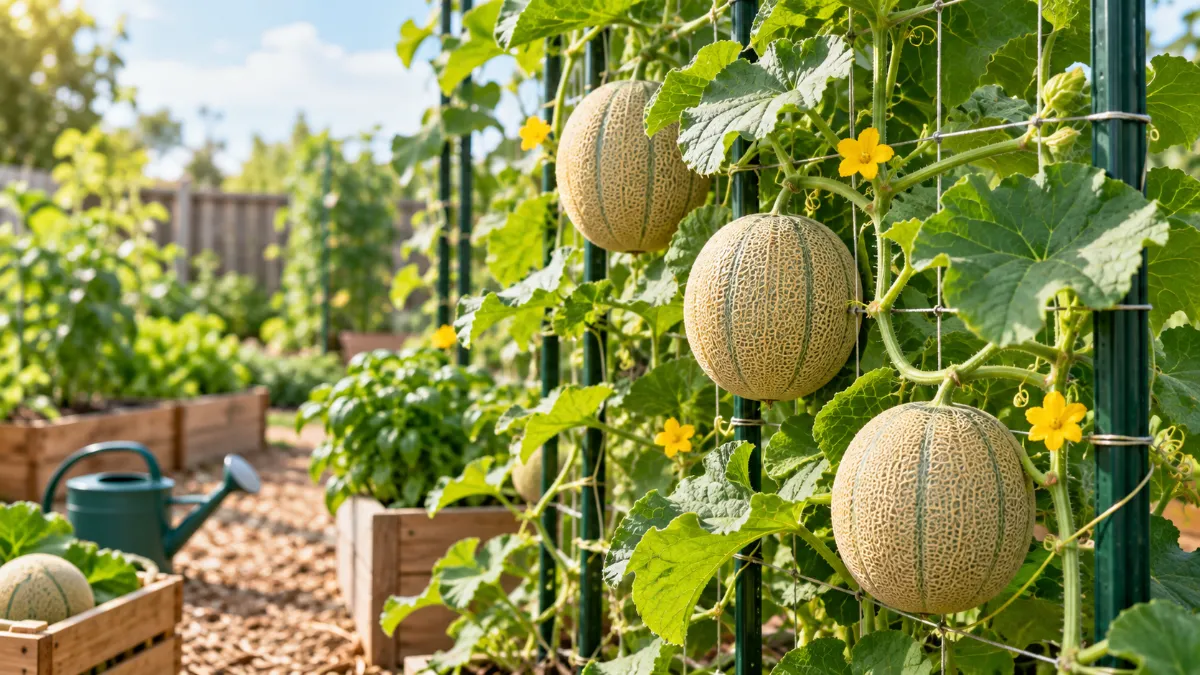
How to Grow Cantaloupe Vertically is a practical way to save garden space while keeping vines easier to inspect. In practice, the method depends on three essentials: a sturdy trellis, early vine training, and soft slings that support developing melons. With full sun, rich soil, and careful tying, cantaloupe can climb instead of spreading across the ground.
For a small raised bed or compact backyard plot in 2026, vertical growing offers a useful alternative to traditional sprawling rows. However, cantaloupes become heavy as they develop, so the support must be planned before planting rather than added after the vines become large.
Quick summary:
To grow cantaloupe vertically, install a strong trellis before planting, position seeds or young transplants at its base, and guide flexible stems upward with loose ties. As the plant climbs, gently wrap its tendrils around the support. Once fruit forms, place each melon in a soft sling attached to the trellis.
However, this approach is not simply a matter of pointing a vine toward a structure. The plant needs support at several stages. First, a secure frame carries the vine. Next, gentle training establishes its direction. Finally, slings protect fruit that becomes too heavy for the stem alone.
Read More: When to Plant Pumpkins in Ohio
The best trellis for vertical cantaloupe is a rigid structure that stays stable when exposed to wind and loaded with vines and fruit. Suitable choices include a cattle panel, a heavy-duty metal arch, or a sturdy wooden A-frame.
A cattle panel provides broad climbing space and strong wire openings. By contrast, a metal arch can work well over a narrow path or raised bed. Meanwhile, a wooden A-frame offers a practical option for gardeners who prefer a freestanding structure.
Install the trellis securely in a raised bed or in-ground garden. Otherwise, loose supports may lean when the vines become dense. As a result, that movement can strain stems and make fruit support harder later in the season.
Before planting, press and test the structure gently from several directions. It should not wobble noticeably. Also, check that the lower edge sits close enough to the planting area for young stems to reach the support without crossing exposed soil.
For growing guidance on melons and related garden practices, the University of Minnesota Extension melon resource provides a useful reference. Even so, local growing conditions can change the best planting position and support arrangement.
Compact and standard cantaloupe varieties can adapt to vertical growing when their vines receive a suitable structure. For example, Hale’s Best and Sugar Cube are two practical choices for gardeners planning to train cantaloupe upward.
Variety selection matters because the plant must fit the available support and garden space. A compact type may suit a smaller raised bed, while a standard variety may need more room for its stems and leaves.
Therefore, do not choose a variety based only on the label. Consider the height and width of your trellis, the location of the planting site, and how easily you can reach developing fruit. In a limited-resource garden, access can matter as much as the final melon size.
Begin training when the stems are young and flexible. Then, plant seeds or young transplants right at the base of the trellis and guide the first stems upward instead of allowing them to spread in several directions.
Use garden twine or soft cloth strips to attach the stems loosely. A tie should guide the vine without cutting into it. At the same time, leave enough space for the stem to expand as it grows.
Cantaloupe plants also produce natural tendrils. Therefore, gently wrap these tendrils around trellis wires or strings to help the plant grab the structure. Avoid forcing a stiff or brittle stem into a tight curve.
A simple training routine works best. In particular, inspect the vines every few days during active growth, especially after warm weather or strong wind. Small adjustments are easier than correcting a long vine that has already fallen outward.
Soft slings support cantaloupes after fruit begins to develop. Place a sling beneath each heavy melon and attach both ends to the trellis. The sling should cradle the fruit without squeezing it or restricting the stem.
Suitable sling materials include soft cloth strips or other breathable fabric that will not scrape the rind. However, avoid thin, rigid ties around the fruit itself. Instead, the support should distribute weight across the sling and trellis.
Add support when the fruit is clearly developing weight but before the stem appears strained. Otherwise, waiting until a melon hangs heavily can place unnecessary pressure on the vine.
Check each sling as the fruit grows. The fabric may need adjustment so it remains centered beneath the melon. Also, inspect the trellis attachment points because the fruit’s weight is transferred to the structure.
This is the main difference between vertical cantaloupe and many lighter climbing crops. Although the vine can climb naturally, the fruit may still need deliberate support. In short, the trellis guides growth while the sling carries the load.
Vertical growing uses more preparation than letting cantaloupe spread across the ground, but it can make a small garden easier to manage. The trade-off becomes clearer when space, access, and fruit support are considered together.
| Growing approach | Main advantage | Main challenge |
|---|---|---|
| Vertical trellis | Uses upward space and keeps vines easier to inspect | Needs strong construction, early training, and fruit slings |
| Ground-growing | Requires little initial trellis work | Vines spread across more soil and can be harder to access |
For a gardener with limited bed space, vertical growing may be the more practical choice. On the other hand, someone with abundant open ground and no suitable structure may find ground-growing involves fewer setup tasks.
Ultimately, the decision is not about one method being universally superior. Instead, it depends on whether the garden can provide a secure frame and whether the grower is willing to check ties and slings during the season.
Most problems begin before the fruit becomes large. For instance, a weak frame, late training, or tight ties can create avoidable stress. Therefore, small maintenance checks protect the plant more effectively than emergency repairs.
One common mistake is treating the trellis as a one-time installation. In practice, vertical cantaloupe needs occasional attention as the stems extend and fruit develops. Consequently, a brief inspection can reveal a loose tie, leaning frame, or misplaced sling.
Start with full sun, rich soil, and good drainage. These conditions give the plant a suitable foundation before training begins. In addition, water management should avoid leaving the root area persistently soggy.
Keep the planting area at the trellis base clear enough to reach the lower stems. That access helps you guide growth, inspect ties, and position slings without disturbing the entire bed.
For a budget-conscious setup, use the strongest structure already available rather than adding decorative features that do not improve stability. In other words, the important investment is dependable support at the correct planting position.
Many cantaloupes can be trained upward, but compact or standard varieties such as Hale’s Best and Sugar Cube are suitable options when paired with strong support.
Ground-grown cantaloupe does not require a trellis. However, vertical cantaloupe does because the structure guides the vines and provides a place to attach fruit slings.
A cattle panel, heavy-duty metal arch, or sturdy wooden A-frame can support the vine. In every case, anchor the structure securely in a raised bed or in-ground garden.
Guide young stems upward and attach them loosely with garden twine or soft cloth strips. Tight knots can restrict growing stems, so check each tie regularly.
Yes, natural tendrils can help the plant hold onto trellis wires or strings. Instead, wrap them gently around the support rather than forcing the vine into a sharp bend.
Developing melons become heavy and can strain the vine. As a result, a soft sling cradles the fruit and transfers much of its weight to the trellis.
A sturdy wooden A-frame can work in a raised bed when its legs are stable and the planting position sits directly beside the support.
Begin when the stems are young and flexible. Early guidance makes it easier to establish an upward path without sharply bending older growth.
Successful vertical cantaloupe growing comes down to matching the plant with the structure. Choose a stable trellis, plant at its base, guide young stems early, and use soft slings when fruit gains weight.
For a compact 2026 garden, that sequence offers a clear starting point without requiring a complicated system. Before planting, test the support and prepare the tying material. Then inspect the vines regularly so small adjustments remain simple.
Finally, check local growing guidance for your climate before sowing or transplanting. The best results come from combining a secure structure with attentive, gentle training.
Subscribe to the blog and newsletter to get new updates in simple, clear words straight to your inbox.
Recent Articles
Related Articles
Keengarden is your simple, friendly guide to growing healthy plants, fixing garden problems, and choosing the right tools.
© 2025 keengarden. All rights reserved. Designed by Affpilot