
Gardening Made Simple.
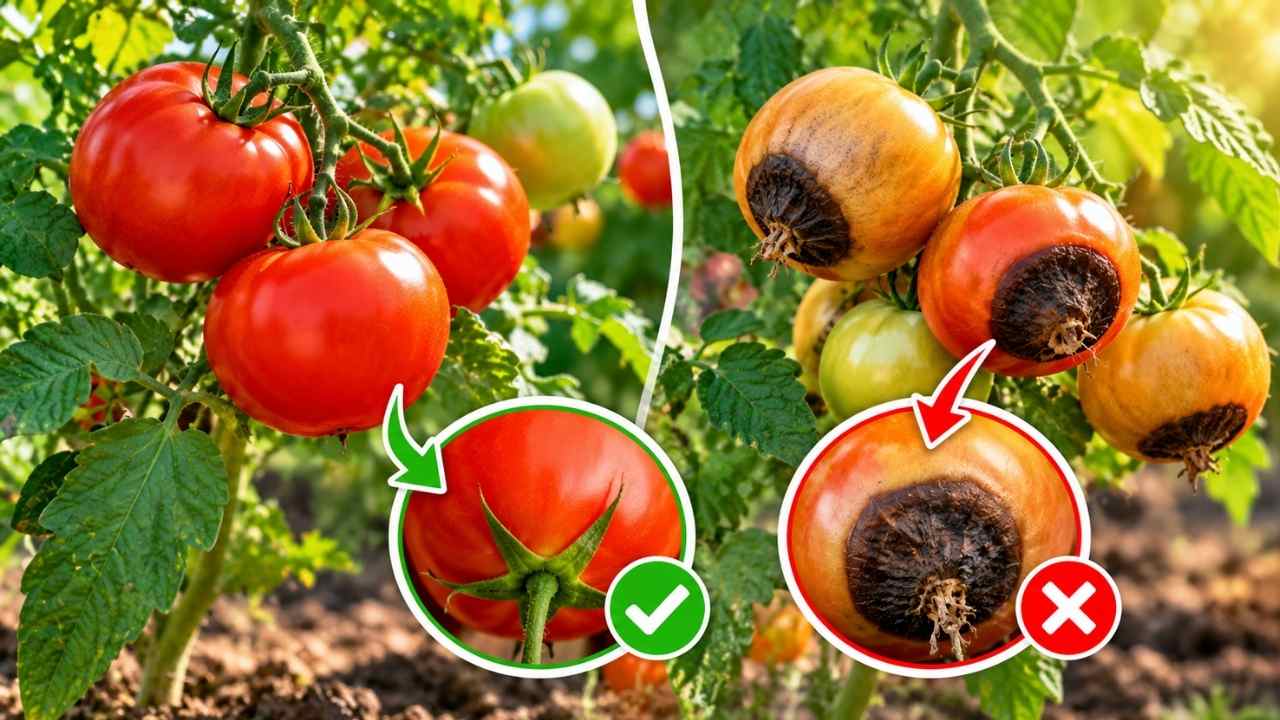
Why do tomato fruits develop dark, sunken patches even when the leaves look healthy? Blossom end rot on tomatoes is a non-parasitic physiological disorder linked to calcium deficiency in developing fruit. In practice, the answer is steady soil moisture, careful root protection and balanced fertilizer use. Calcium sprays may offer temporary support, but consistent watering addresses the main problem.
For Bangladesh gardeners, sudden rain after a dry spell can make the condition appear quickly. As a result, the fruit may look normal near the stem while the bottom is already damaged inside. Recognizing that pattern helps you respond before more tomatoes are affected during the 2026 growing season.
Key Update:
Blossom end rot on tomatoes is a calcium-related disorder that affects developing fruit without being caused by a parasite. Although the plant may contain calcium in the soil, inconsistent moisture or damaged roots can prevent enough calcium from reaching the fruit.
Calcium does not move into developing tomatoes at the same rate under every condition. In particular, when soil moisture changes sharply, the plant’s internal transport system becomes less effective. As a result, the fruit tissue at the blossom end can break down while the upper portion still appears healthy.
The condition is not the same as a contagious disease. Therefore, removing one affected tomato will not prevent spread in the way it would with an infectious problem. Instead, the useful response is to stabilize the growing conditions around the plant.
Read More: Companion Planting Chart for Vegetables
Blossom end rot on tomatoes usually starts with a small water-soaked mark on the bottom of the fruit. At first, the spot can resemble a bruise. Within a short period, however, it may enlarge and become dark brown or black.
The damaged area often turns sunken and leathery. In some cases, internal tissues become discolored or shrunken even when the top of the tomato looks normal. Therefore, cutting open a seemingly sound fruit can reveal hidden damage.
For that reason, look at the bottom of several fruits rather than judging the crop from the leaves alone. A plant can remain green and vigorous while individual tomatoes show clear signs of calcium transport trouble.
The central issue is not always a total lack of calcium in the soil. More often, the tomato plant cannot take up or move enough calcium during a period of rapid fruit development. In practice, four growing conditions commonly contribute to blossom end rot on tomatoes.
Drought followed by heavy watering creates sharp swings between dry and wet soil. Consequently, those swings interfere with the plant’s ability to move calcium toward developing fruit. In Bangladesh, irregular rainfall can create the same problem even when gardeners water regularly on some days.
Sudden growth spurts can make fruit develop faster than the plant can supply calcium. Heavy rain may also accelerate growth by providing a sudden increase in available water. As a result, the plant faces a temporary mismatch between fruit demand and calcium intake.
Deep tilling or cultivating too close to the tomato stem can cut roots. In turn, damaged roots absorb less water and fewer nutrients. That reduction matters most when the plant is setting fruit or experiencing hot weather.
Excess nitrogen can encourage fast leafy growth that competes with fruit development. Fertilizers containing too much ammonia can also block calcium absorption. Therefore, adding more fertilizer without checking the watering routine may worsen the imbalance.
The most reliable treatment for blossom end rot on tomatoes is to restore an even watering routine and protect the root zone. First, remove badly affected fruit so the plant can direct energy toward healthier fruit. Calcium sprays can act as a temporary supplement, but they do not replace steady moisture management.
One to 1.5 inches equals roughly 25 to 38 millimetres of water across the soil surface. Rainfall contributes to that amount. Therefore, a simple rain gauge can help you avoid adding a full watering session after a substantial shower.
For a practical reference on the disorder, the University of Minnesota Extension explanation of tomato blossom-end rot also emphasizes the relationship between moisture management and calcium movement.
Water slowly enough to moisten the root zone rather than wetting only the soil surface. In general, a deep watering schedule is more useful than frequent light splashes. Before watering, check the soil near the plant because rainfall may already have supplied part of the weekly requirement.
Mulch reduces evaporation and helps buffer the root zone after hot weather or rain. For example, straw, grass clippings and wood chips are suitable options. A layer around the plant can keep moisture more stable, which directly supports better calcium movement into developing fruit.
Suppose a tomato bed receives heavy rain after several dry days. In that case, adding more water immediately may keep the soil saturated. Instead, waiting until the upper soil begins to dry can create a steadier balance for roots and fruit.
Many gardeners respond to blossom end rot on tomatoes by applying more fertilizer at once. Unfortunately, that approach can increase leafy growth without correcting the moisture problem. The better sequence is to inspect watering, protect roots and then review fertilizer use.
Another common mistake is treating every dark spot as the same problem. Instead, the location matters. A lesion that begins at the blossom end points toward blossom end rot, while damage in other areas may require a different diagnosis.
Calcium sprays can be useful as a temporary supplement when developing fruit shows signs of blossom end rot on tomatoes. However, they have a limited role because the core problem often involves water movement through the plant rather than a simple shortage of calcium on the fruit surface.
The expert-level judgment is straightforward: treat calcium spray as a supporting step rather than the main solution. Ultimately, a stable root environment usually matters more than repeatedly adding a product.
Remove tomatoes with large dark or leathery areas once the damage is obvious. By doing so, you prevent the plant from continuing to invest energy in fruit with significant tissue loss. Smaller affected fruit may still be monitored, but damaged tissue will not return to normal.
Use clean hands or clean cutting tools when harvesting affected fruit. Also, discard rotten tomatoes rather than leaving them beneath the plant where they can attract pests or complicate crop inspection.
After removal, keep watching new fruit. If new tomatoes develop normally after watering becomes consistent, the plant is responding to better growing conditions. If damage continues, review root disturbance and fertilizer practices.
Bangladesh’s hot periods and irregular rain can make moisture management difficult in open gardens and containers. Containers dry faster than ground beds, while compacted soil can hold excess water after storms. Therefore, both situations can create the moisture swings associated with blossom end rot on tomatoes.
A seven-day watering record can reveal the problem clearly. For example, several dry days followed by one heavy watering is a pattern worth correcting. In contrast, the record is more useful than guessing from leaf colour alone.
No. Blossom end rot on tomatoes is a non-parasitic physiological disorder connected with calcium deficiency in developing fruit. In many cases, moisture stress and root problems limit calcium movement.
Already dark, sunken or leathery tissue will not return to normal. Instead, remove badly damaged fruit and improve watering so later fruit has better growing conditions.
Provide about 1 to 1.5 inches of water per week. However, adjust for rainfall so the soil does not alternate between bone-dry and soaked.
Mulch helps stabilize soil moisture, so it can reduce risk. Nevertheless, it cannot correct root damage or excessive fertilizer by itself.
A foliar product such as Bonide Rot-Stop or Southern Ag Stop Blossom-End Rot may offer temporary support. Even so, correcting inconsistent watering remains the more important step.
Yes. Heavy rain after dry conditions can contribute to rapid growth and unstable moisture. Therefore, check drainage and let the soil reach a balanced moisture level before watering again.
Adding more fertilizer is not the first response. Instead, review fertilizer use because excess nitrogen or ammonia can interfere with calcium absorption before applying anything extra.
Blossom end rot on tomatoes is best managed through steady growing conditions rather than a single quick fix. Water consistently, use mulch, avoid root damage and remove fruit with advanced symptoms. Meanwhile, calcium sprays can supplement the response, yet they should not replace moisture control.
Start by measuring weekly water near the target of 1 to 1.5 inches, then observe new fruit over the following days. Before changing fertilizer or applying a product, check the soil moisture and confirm that tomato roots have not been disturbed.
Subscribe to the blog and newsletter to get new updates in simple, clear words straight to your inbox.
Recent Articles
Related Articles


Keengarden is your simple, friendly guide to growing healthy plants, fixing garden problems, and choosing the right tools.
© 2025 keengarden. All rights reserved. Designed by Affpilot